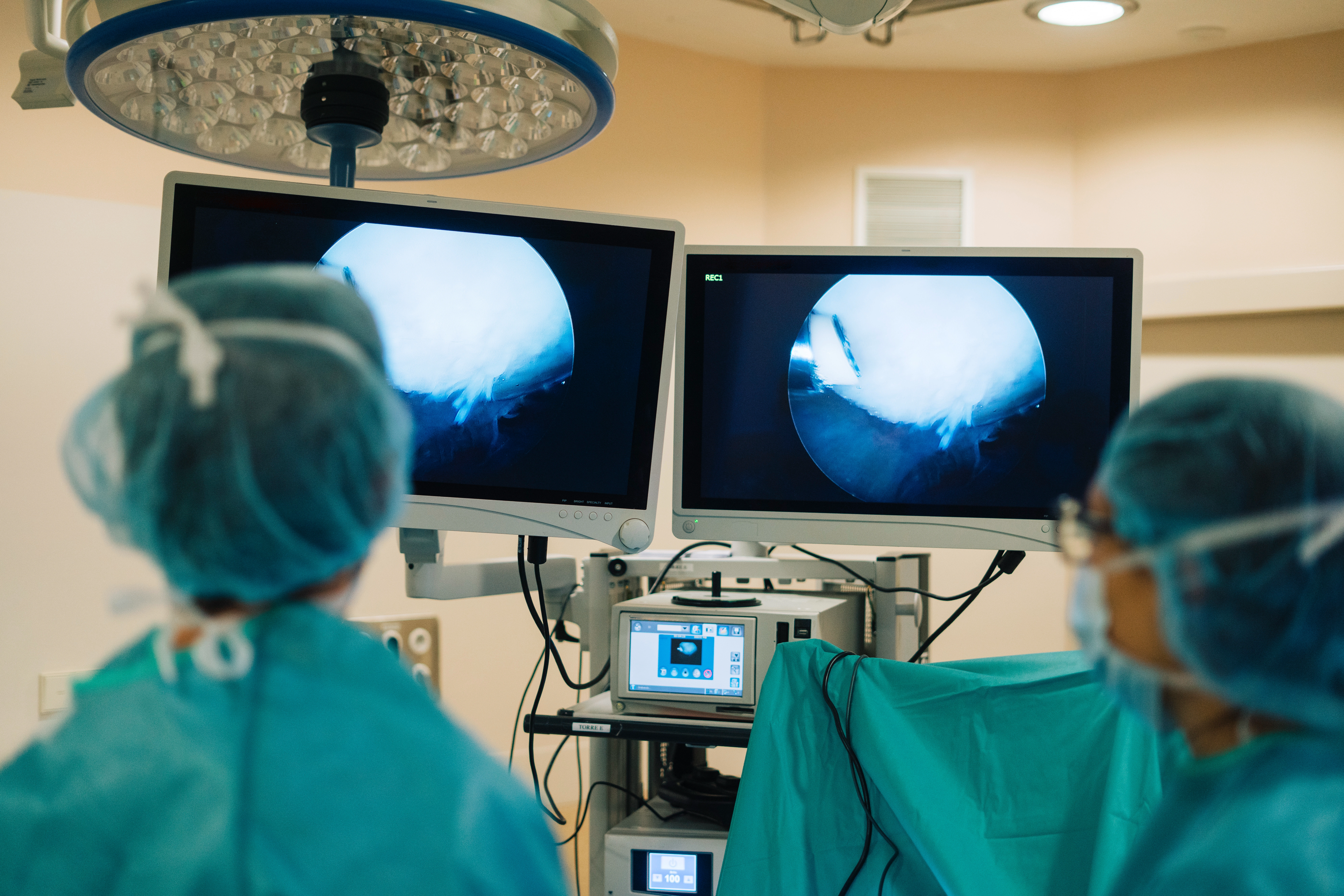
A spine surgeon in Dubai diagnoses and treats conditions of the neck and back, from herniated discs and sciatica to spinal stenosis, scoliosis, and spinal tumours. At DRFK Turkish Medical Center, Op. Dr. Fatih Kırar, known as the Neurosurgery & Spine Specialist, a DHA-licensed spine and neurosurgery specialist with 17+ years of experience, provides minimally invasive and complex surgery only after diagnosis confirms it is needed.
DRFK Turkish Medical Center is located at Villa 2, Al Athar Street, Jumeirah 3, Dubai. The clinic is easily accessible from Jumeirah, Umm Suqeim, Al Safa, Business Bay, and Downtown Dubai within around 15 minutes via Sheikh Zayed Road, with on-site parking available.
Spine surgery in Dubai at DRFK Turkish Medical Center is performed by Op. Dr. Fatih Kırar, a DHA-licensed spine and neurosurgery specialist with 17+ years of experience. He delivers the full spectrum of care, minimally invasive laser disc decompression, endoscopic discectomy, microdiscectomy, laminectomy, spinal fusion, cervical ACDF, scoliosis correction, and spinal tumour surgery, within DRFK’s DHA-licensed, ISO-compliant facility in Jumeirah 3.
Most patients are managed non-surgically first. Surgery is recommended only when clinical criteria confirm that continued conservative care carries greater risk than the surgical benefit–risk balance.
Most back and neck pain does not require a surgeon, which is why knowing when to seek specialist assessment matters. You should see a spine surgeon in Dubai if pain radiates into an arm or leg, if you have numbness, tingling, or muscle weakness, if walking distance is shrinking because of leg cramping, or if conservative care over six to twelve weeks has not helped.
Some symptoms are emergencies. Sudden loss of bladder or bowel control with back pain may indicate cauda equina syndrome and requires immediate emergency care, not a clinic appointment. Progressive leg weakness, foot drop, fever with back pain and weight loss, or worsening after injury all warrant urgent assessment. Recognising these signals early is the single most important factor in protecting long-term neurological function, and it is the first thing Op. Dr. Fatih Kırar evaluates at DRFK.
The first question a responsible spine surgeon asks is not which operation, but whether surgery is needed at all. At DRFK, surgery is treated as a last resort, and most patients are managed non-surgically first through the spine treatment pathway. Op. Dr. Fatih Kırar applies a consistent framework to every new patient.
The value of a spine specialist is as much in knowing when not to operate as in the operation itself.
| Surgery IS appropriate when | Surgery is NOT appropriate when |
|---|---|
| Progressive neurological deficit | Conservative care not yet completed |
| Cauda equina syndrome | Symptoms stable or improving |
| Confirmed spinal instability | Imaging does not match symptoms |
| Myelopathy (cord compression) | Risk outweighs benefit for that patient |
| Failed 6–12 weeks of conservative care | Pain alone without a structural cause |
| Tumour or infection with neurological compromise |
Effective treatment starts with understanding what is compressed, destabilised, or damaged. The spine has three regions, and the condition usually maps to the region.
The cervical spine (C1–C7) is the most mobile region and supplies the arms and hands. Disc herniation and spondylosis dominate here, producing neck pain, arm pain, and hand weakness when a nerve root or the cord is compressed. Treatment ranges from conservative care to cervical surgery.
The thoracic spine (T1–T12) is the least mobile region. Cord compression from tumours, fractures, and disc pathology here carries higher neurological risk and often needs careful surgical planning.
The lumbar spine (L1–S1) bears load. Disc herniation, spinal stenosis, spondylolisthesis, and degenerative disc disease here cause sciatica and leg weakness, the most common reason for lumbar spine surgery in Dubai.
The underlying mechanism is consistent: a herniated disc compresses a nerve root, producing radiating pain, numbness, and weakness. Surgery interrupts that sequence by removing the compressing material or expanding the canal, while fusion is reserved for conditions where the segment has lost stability.
No surgical plan at DRFK is confirmed without complete diagnostic assessment, led by Op. Dr. Fatih Kırar and supported by Dr. Vivek Kapoor, Specialist Radiology. Diagnosis drives the plan, not the other way around.
Matching the symptom to the imaging is what prevents unnecessary surgery. Arm pain with hand weakness points to cervical root compression; leg pain below the knee with foot drop points to a lumbar disc; bilateral leg cramping relieved by sitting points to lumbar stenosis.
| Diagnostic Tool | Surgical Application |
|---|---|
| MRI spine (MRI services) | Gold standard for disc level, root and cord compression, tumour, infection |
| CT spine | Bony detail: fracture, spondylolysis, foraminal narrowing |
| Standing X-ray | Alignment, spondylolisthesis grade, flexion-extension instability |
| NCS / EMG | Confirms nerve root level and severity |
| CT angiography | Vascular anatomy for complex tumour cases |
| Blood panel | Inflammatory markers, coagulation, surgical fitness |
DRFK follows a clear treatment escalation: conservative care, then injections, then minimally invasive surgery, then open surgery only when required. The goal is the least invasive approach that reliably achieves the surgical objective.
Percutaneous laser disc decompression reduces intradiscal pressure under local anaesthesia, with desk return in three to five days. Minimally invasive spine surgery through endoscopic and keyhole approaches achieves outcomes equivalent to open surgery with less blood loss and faster recovery.
Microdiscectomy is the gold standard for lumbar disc herniation with persistent sciatica. Laminectomy decompresses spinal stenosis causing walking limitation or progressive weakness.
Spinal fusion stabilises unstable segments using cages, pedicle screws, and bone graft, indicated for spondylolisthesis and structural instability. Cervical ACDF and artificial disc replacement decompress the cord or nerve root while either stabilising or preserving motion.
Tumour surgery decompresses the cord with maximum safe removal and stabilisation. Scoliosis treatment through instrumented fusion corrects progressive structural deformity.
This distinction matters more than most patients realise. An orthopaedic spine surgeon focuses on musculoskeletal surgery, instrumentation, and deformity correction. A neurosurgeon spine specialist trains in neural anatomy, spinal cord surgery, and conditions where neurological preservation is the priority.
Op. Dr. Fatih Kırar combines both disciplines. His 17+ years span minimally invasive decompression through complex fusion and spinal tumour surgery, meaning neurological precision and reconstructive capability come from a single specialist. This integration is rare among Dubai spine programmes, where neurological evaluation and surgical reconstruction are often split between different clinicians.
Not every condition can be treated through a keyhole, and choosing the right approach is a clinical decision, not a marketing one. Complex multi-level fusion, deformity correction, and tumour resection require open exposure. DRFK selects the least invasive approach that reliably achieves the objective, rather than the least invasive regardless of whether it is adequate.
| Factor | Minimally Invasive | Open Surgery |
|---|---|---|
| Incision | 7–20 mm | 3–10 cm |
| Muscle disruption | Minimal | Significant |
| Blood loss | Low | Moderate–high |
| Hospital stay | Day case–2 days | 2–7 days |
| Desk-work recovery | 3 days–3 weeks | 3–10 weeks |
| Best for | Disc herniation, early stenosis | Complex fusion, deformity, tumour |
Knowing the steps removes uncertainty. The pathway at DRFK is structured and consistent.
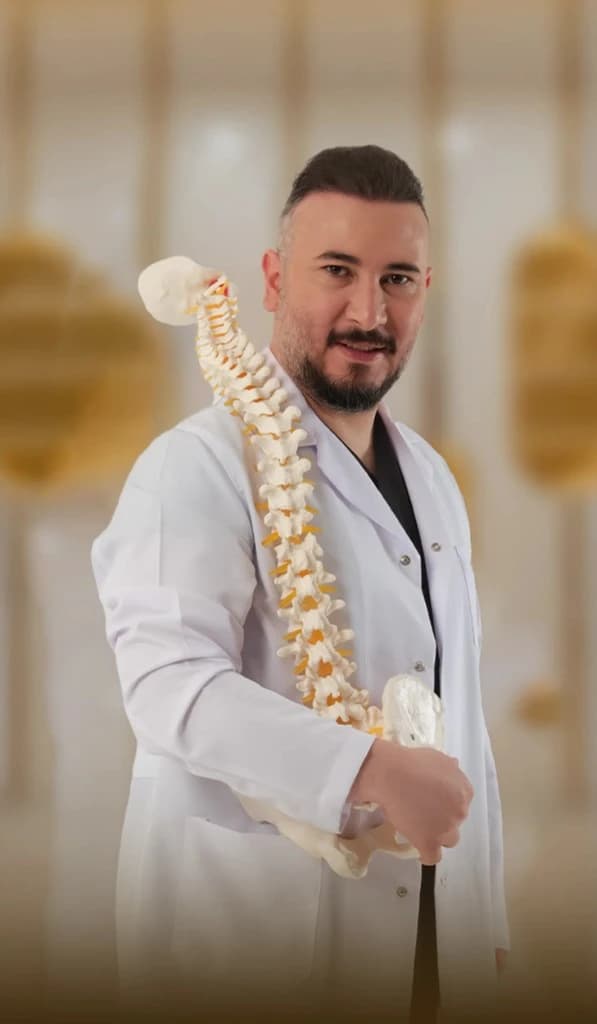
Lead specialist
Neurosurgeon, neurospine
Brain & Spine Surgery
17+ years experience
DHA License No: 20305968-001
Op. Dr. Fatih Kırar (full profile)Transparency about risk is part of informed consent, and every DRFK patient receives an individual risk-benefit discussion before surgery.
DRFK's safety systems include continuous IONM during major procedures, pre-surgical MRI level confirmation, an ISO-compliant sterile theatre, specialist anaesthesia, and walking within 24–48 hours for most procedures.
| Recognised Risk | Approximate Rate / Management |
|---|---|
| Wound infection | 1–3% |
| Deep disc or implant infection | 0.5–1% |
| Nerve damage | Rare with IONM |
| Revision (fusion cases) | 5–15% within 10 years |
| CSF leak | Repaired intraoperatively |
| DVT / PE | Prevented with prophylaxis and early mobilisation |
Recovery depends on the procedure, and realistic timelines are explained before surgery.
| Procedure | Hospital Stay | Desk Return | Full Activity |
|---|---|---|---|
| Laser disc decompression | Day case | 3–5 days | 3–4 weeks |
| Endoscopic discectomy | Day case–1 day | 1–2 weeks | 4–6 weeks |
| Microdiscectomy | 1–2 days | 2–4 weeks | 6–8 weeks |
| ACDF / cervical surgery | 1–3 days | 3–6 weeks | 8–12 weeks |
| Laminectomy | 2–4 days | 4–8 weeks | 8–12 weeks |
| Spinal fusion | 3–5 days | 6–10 weeks | 3–6 months |
Lead specialist
Neurosurgeon, neurospine
Brain & Spine Surgery
17+ years experience
DHA License No: 20305968-001
View full profileOp. Dr. Fatih Kırar, founder of DRFK Turkish Medical Center and known among patients as the "Neurosurgery & Spine Specialist," is a DHA-licensed spine and neurosurgery specialist with 17+ years of experience and across cervical and lumbar pathology, fusion, tumour, and trauma.
As Op. Dr. Fatih Kırar puts it, the most important skill in spine surgery is knowing when not to operate, and the second is knowing which operation gives this patient a lasting result with the least disruption.
Spine surgery cost in Dubai depends on procedure complexity, instrumentation, and hospital stay, so a personalised estimate is provided after consultation with Op. Dr. Fatih Kırar. Most UAE insurance plans cover clinically indicated spine surgery, including disc herniation with neurological deficit, stenosis, tumour, and fracture, and DRFK's team manages pre-authorisation.
Percutaneous laser disc decompression, day case, fastest return for selected contained herniations.
Endoscopic and MIS microdiscectomy with smaller incisions and faster recovery.
Gold-standard lumbar disc herniation surgery under the operating microscope.
Canal decompression for spinal stenosis and neurogenic claudication.
Instrumentation and fusion for instability, spondylolisthesis, and structural failure.
Anterior cervical decompression with fusion or motion-preserving ADR.
Cord decompression and stabilisation for primary and metastatic spinal tumours.
Instrumented fusion for progressive structural deformity.
Bring all MRI, CT, and X-ray discs or reports to your first consultation
Follow lifting restrictions strictly for the period specified on your discharge sheet
Stop smoking, it delays fusion healing significantly
Attend all physiotherapy sessions with Dr. Amina Zafar’s team
Report new weakness, bladder/bowel changes, or fever without delay
Medically reviewed by Op. Dr. Fatih Kırar, Spine & Neurosurgery Specialist, DRFK Turkish Medical Center, Jumeirah 3, Dubai.
Every day: 9:00 AM – 6:00 PM
Villa 2 Al Athar Street, Jumeirah 3, Dubai, United Arab Emirates