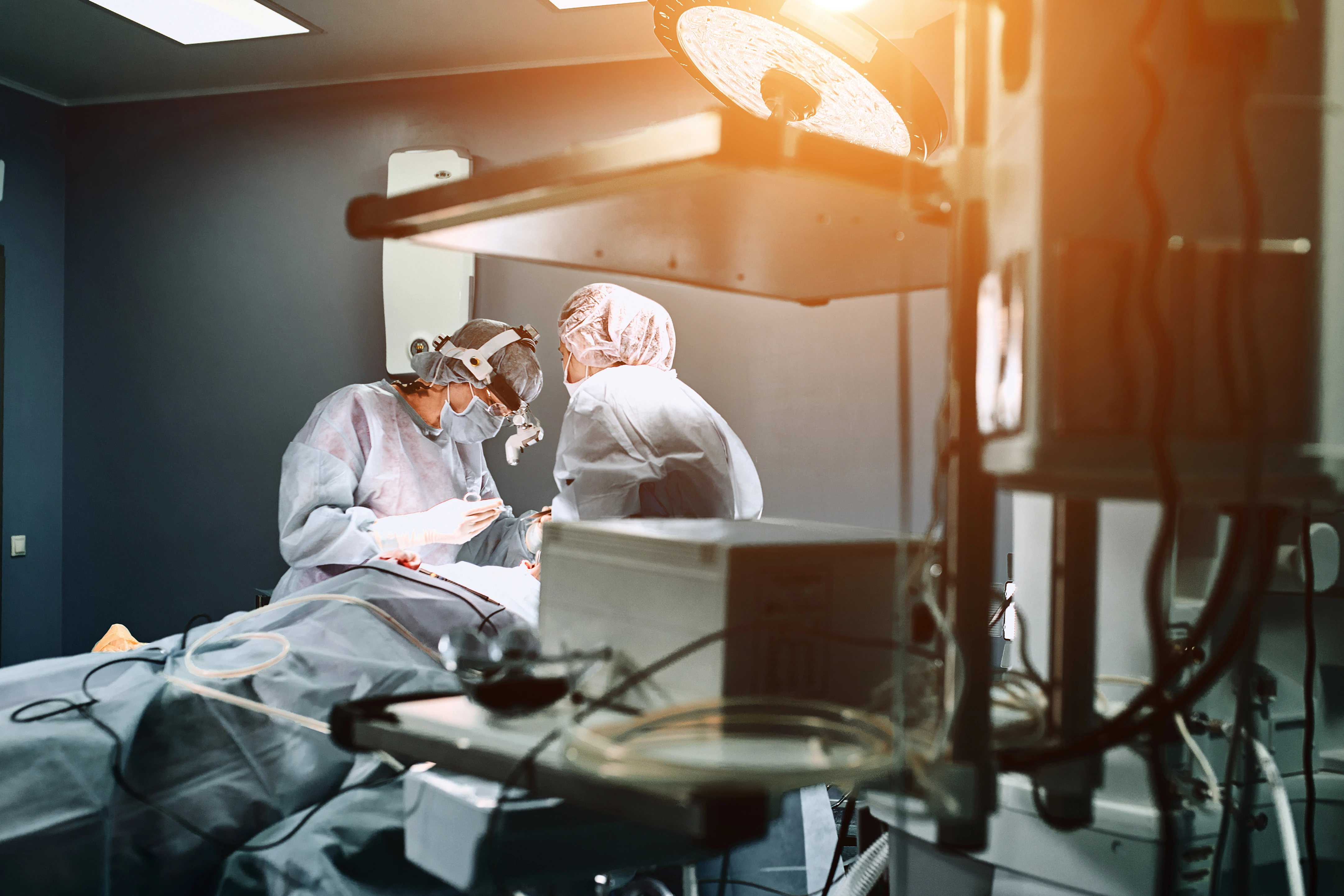
Laser spine surgery in Dubai at DRFK, percutaneous laser disc decompression (PLDD), is the least invasive surgical option for contained disc herniation causing sciatica. Op. Dr. Fatih Kırar, DHA-licensed spine and neurosurgery specialist (17+ years), delivers laser energy through a fine needle under local anaesthesia without incision, general anaesthesia, or hospital admission.
DRFK Turkish Medical Center is located at Villa 2, Al Athar Street, Jumeirah 3, Dubai. The clinic is easily accessible from Jumeirah, Umm Suqeim, Al Safa, Business Bay, and Downtown Dubai within around 15 minutes via Sheikh Zayed Road, with on-site parking available.
PLDD reduces intradiscal pressure through a needle, not a universal solution for all spinal conditions. The most important step is candidacy assessment: suitable patients proceed; others receive endoscopic discectomy, microdiscectomy, or structured non-surgical care.
For the right patient with a contained disc, PLDD provides excellent relief with minimal recovery. For non-contained herniation, progressive neurology, or instability, it produces no benefit and delays correct treatment.
Laser spine surgery in Dubai, percutaneous laser disc decompression (PLDD), uses heat-based tissue vaporisation to reduce herniated disc volume. Understanding the mechanism explains both its power and its limits.
Contained herniation: nucleus bulges within intact outer annulus, PLDD can work. Non-contained extrusion/sequestration: free fragment in canal, pressure reduction does not affect it; endoscopic or open discectomy required.
At DRFK, pre-procedure MRI is mandatory to confirm containment before any laser back surgery in Dubai. PLDD on non-contained herniation delays appropriate care.
Op. Dr. Fatih Kırar confirms Steps 1 and 2 are completed before PLDD. Patients not suitable receive the correct alternative, not an inappropriate procedure.
| Step | Treatment | When |
|---|---|---|
| 1 | Physiotherapy + laser therapy | All patients, first line |
| 2 | Epidural / nerve root block | Neurology + 4–6 weeks physio failure |
| 3 | Laser spine surgery (PLDD) | Contained herniation + 6+ weeks conservative failure |
| 4 | Endoscopic discectomy | Non-contained or PLDD failure |
| 5 | Microdiscectomy | Persistent sciatica after 6–12 weeks |
| 6 | Open fusion / laminectomy | Stenosis, instability, progressive neurology |
MRI confirming contained herniation; NCS for level; blood panel and coagulation screen.
Prone positioning; C-arm confirms anatomy and needle trajectory in real time.
Patient fully conscious, communicating throughout, no general anaesthetic.
18-gauge introducer under fluoroscopy to disc nucleus, position confirmed before activation.
Controlled pulses 20–30 minutes; mild warmth or pressure, not pain.
No sutures; patient walks within minutes.
30–60 minutes observation; desk return typically 3–5 days.
Laser spine surgery is not to microdiscectomy, it is a less invasive option for a more limited indication. Wrong anatomy produces no benefit and delays correct treatment.
| Factor | PLDD | Microdiscectomy | Spinal fusion |
|---|---|---|---|
| Anaesthesia | Local | General | General |
| Incision | None (needle) | Small (~2 cm) | 5–10 cm |
| Hospital stay | Day case | 1–2 days | 3–5 days |
| Disc removal | Pressure reduction only | Fragment removed | Removal + stabilisation |
| Desk return | 3–5 days | 2–4 weeks | 6–10 weeks |
| Best for | Contained herniation | Non-contained + sciatica | Instability + stenosis |
| Success rate* | 70–80% selected cases | 85–95% | 85–95% |
| Re-operation (5 yr) | 15–20% | 5–10% | 3–8% |
70–80% of appropriately selected patients improve significantly within 4–8 weeks; peak at 3 months. Structured follow-up continues until adequate relief, pathway does not end with PLDD.
| Phase | What to expect |
|---|---|
| Day of procedure | Discharge within 60–90 minutes; mild needle-site soreness |
| Days 1–3 | Mild back soreness; no driving; light activity |
| Days 3–7 | Most patients ready for desk work; walking encouraged |
| Weeks 1–4 | Progressive sciatica reduction; physio from week 2 |
| Months 1–3 | Full resolution in majority of responders |
| 3 months | Residual symptoms → review for endoscopic or open escalation |
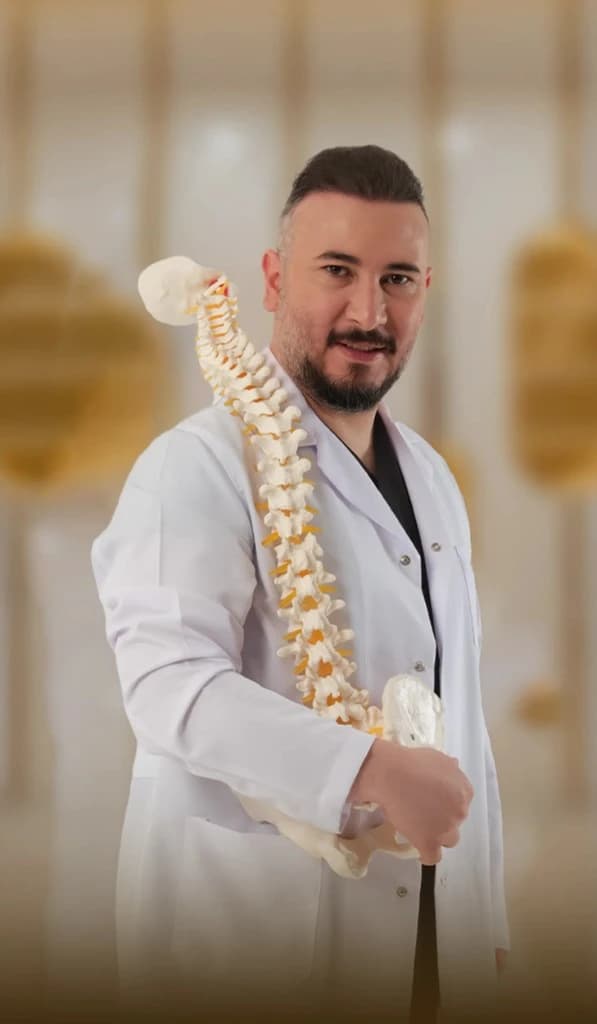
Lead specialist
Neurosurgeon, neurospine
Brain & Spine Surgery
17+ years experience
DHA License No: 20305968-001
Op. Dr. Fatih Kırar, Full profileFounder, DRFK. DHA-licensed spine and neurosurgery, 17+ years. PLDD, endoscopic, and open pathways when laser alone is insufficient. Outcome depends on rigorous candidacy.
"The most important determinant of PLDD outcome is correct patient selection.", Op. Dr. Fatih Kırar
Cost depends on levels treated and assessment complexity, estimate after consultation. Clinically indicated PLDD may qualify for UAE coverage with pre-authorisation managed by our team.
Contained vs non-contained classification, mandatory before PLDD.
18-gauge needle, laser fibre, local anaesthesia, 20–30 minutes per level.
Escalation to endoscopic or open discectomy if inadequate relief.
Dr. Amina Zafar, week 2 onward to prevent recurrence.
Bring all MRI discs and reports to consultation
Complete structured physiotherapy before considering PLDD escalation
Report new leg weakness or bladder/bowel change immediately
Attend the 3-month review even if improving
Continue core strengthening long term after recovery
Medically reviewed by Op. Dr. Fatih Kırar, Spine & Neurosurgery Specialist | DRFK Turkish Medical Center, Jumeirah 3, Dubai | Last updated: April 2026
Every day: 9:00 AM – 6:00 PM
Villa 2 Al Athar Street, Jumeirah 3, Dubai, United Arab Emirates