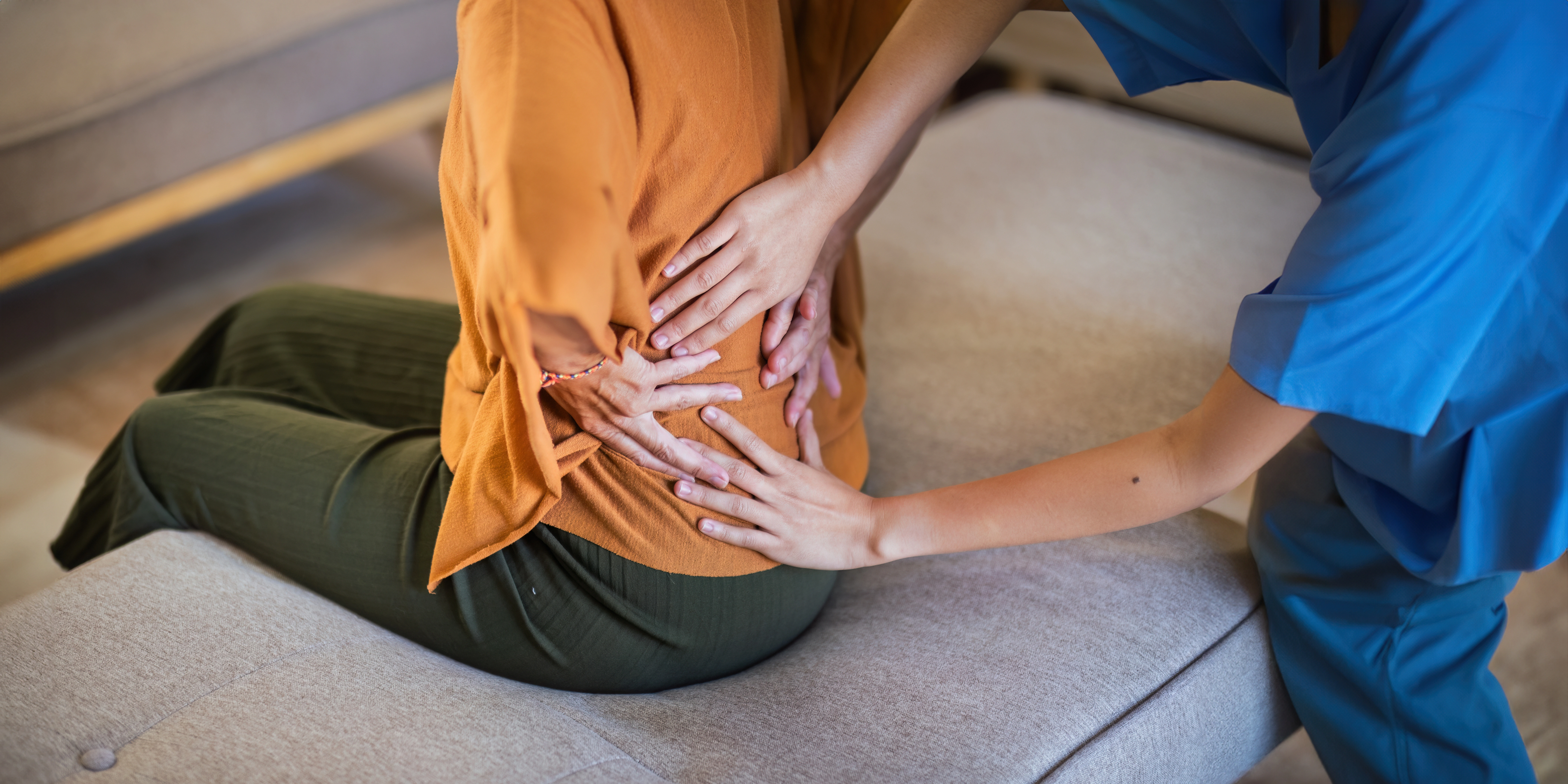
Slip disc treatment in Dubai at DRFK Turkish Medical Center is delivered by Op. Dr. Fatih Kırar, DHA-licensed spine and neurosurgery specialist (17+ years). DRFK provides the complete programme for disc prolapse, extrusion, annulus tear, and nucleus leakage at lumbar and cervical levels, sciatica, radiculopathy, and progressive nerve compression.
DRFK Turkish Medical Center is located at Villa 2, Al Athar Street, Jumeirah 3, Dubai. The clinic is easily accessible from Jumeirah, Umm Suqeim, Al Safa, Business Bay, and Downtown Dubai within around 15 minutes via Sheikh Zayed Road, with on-site parking available.
Slip disc treatment in Dubai at DRFK Turkish Medical Center is delivered by Op. Dr. Fatih Kırar, DHA-licensed spine and neurosurgery specialist (17+ years). DRFK provides the complete programme for disc prolapse, extrusion, annulus tear, and nucleus leakage at lumbar and cervical levels, sciatica, radiculopathy, and progressive nerve compression.
The majority of slipped disc patients, including confirmed extrusion with sciatica, achieve significant relief through physiotherapy, laser, spinal decompression, and targeted injection before any surgical escalation.
Patients often use “slipped disc” for sharp back/leg or neck/arm pain. The medical picture may be disc herniation, annular tear with inflammation, or combined canal narrowing. MRI and a focused exam determine what is compressing neural tissue.
Colloquial “slip” often means a herniated fragment; on X-ray, listhesis can mean one vertebra has slid forward on another, a separate stabilisation discussion. MRI and exam sort the two before any plan is fixed.
Seek emergency care for:
"Slip disc" is the colloquial term for intervertebral disc herniation, the pathological process by which the inner gel-like nucleus pulposus leaks through a tear in the outer annulus fibrosus and compresses the adjacent spinal nerve root. The disc does not literally "slip", the nucleus ruptures through the annular wall. This distinction matters clinically because the size and type of rupture determine the treatment approach.
Core mechanism: disc ruptures → compresses nerve root → sciatica, numbness, and motor weakness in the limb supplied by the compressed root.
Disc bulge (protrusion): annulus intact, physiotherapy, laser, spinal decompression.
Disc herniation (focal protrusion): nucleus through inner annulus, physiotherapy, injection, PLDD in the majority.
Disc extrusion: nucleus through outer annulus, endoscopic or open discectomy more often needed.
Disc sequestration: free fragment, must be removed surgically.
Op. Dr. Fatih Kırar correlates clinical examination with MRI before any treatment is selected.
Cauda equina (back pain + sudden bladder or bowel loss): call 999 immediately or attend emergency, do not wait for a routine appointment.
Yes, in the majority of cases. The herniated nucleus undergoes immune-mediated resorption over weeks to months. Larger extrusions paradoxically often resorb more completely than contained bulges.
Heals without surgery when: contained or moderate extrusion without free fragment; mild stable neurology; structured physio, laser, and injection completed; 6–12 weeks allowed for resorption.
Surgery when: progressive motor deficit; cauda equina; large extrusion or sequestration with severe compression at 12 weeks; intolerable pain despite adequate conservative care.
When does delay become dangerous? Prolonged compression reduces the probability of full neurological recovery after decompression, urgency is assessed at every consultation.
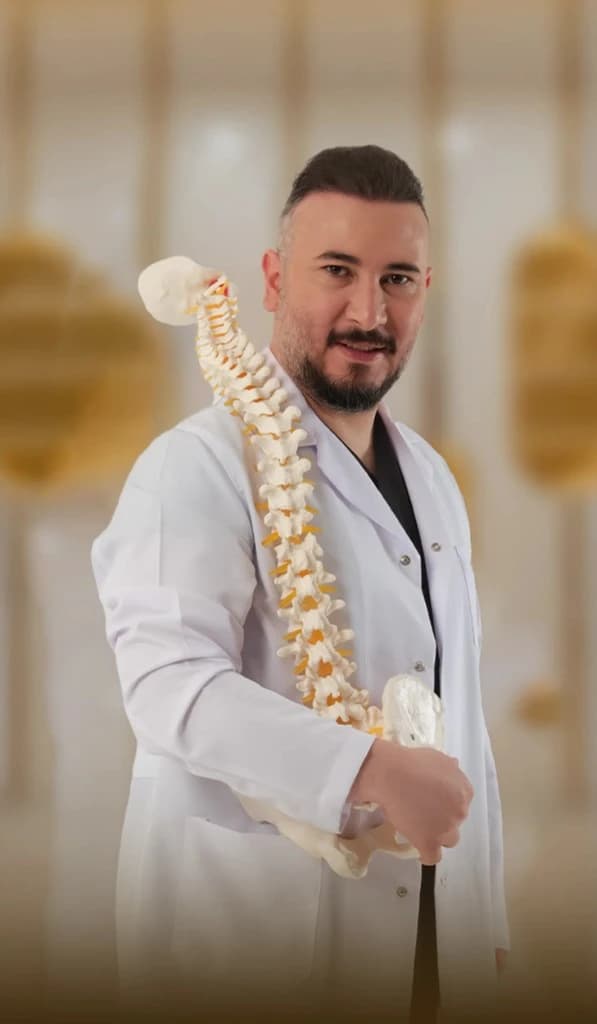
Lead specialist
Neurosurgeon, neurospine
Brain & Spine Surgery
17+ years experience
DHA License No: 20305968-001
View full profile| Diagnostic Tool | Slip Disc Application |
|---|---|
| MRI Lumbar / Cervical Spine | Level, contained vs extrusion vs sequestration, root compression |
| CT Spine | Calcified fragment, foraminal narrowing, surgical planning |
| NCS / EMG | Root level and severity before injection or surgery |
| Straight Leg Raise Test | L4/L5 or L5/S1 tension, positive typically <60° |
Decision flow: bulge/mild extrusion → physio + laser + decompression | moderate + sciatica → injection + physio | 6–12 weeks failure → PLDD | large extrusion → endoscopic or microdiscectomy.
Core stabilisation, neural mobilisation, postural correction, Dr. Amina Zafar. Candidates: bulge, mild-to-moderate extrusion without progressive neurology. Expected: significant improvement within 4–8 weeks.
Reduces disc and nerve root inflammation, synergistic with physiotherapy for faster pain control and rehabilitation.
Mechanical axial distraction, most effective for contained bulge and early extrusion with irritation rather than severe compression.
Op. Dr. Fatih Kırar, fluoroscopy-guided corticosteroid adjacent to the compressed root. Best for sciatica and extrusion with inflammation. Relief within 3–14 days; effect 4–12 weeks.
Selective root injection, diagnostic and therapeutic when multi-level MRI makes lateralisation uncertain.
Laser through a needle reduces intradiscal pressure, contained herniation, day case, desk return 3–5 days. 70–80% success in selected cases. Not for free fragments.
Fragment removed through a 7mm port, day case to 1 night; desk return 1–2 weeks.
Gold standard for persistent sciatica, ~2cm incision, 1–2 days stay, desk return 2–4 weeks.
| Treatment | Best For | Mechanism | Recovery |
|---|---|---|---|
| Physiotherapy | Bulge, mild extrusion, stable | Muscle support, disc resorption | 4–8 weeks |
| Laser Therapy | Discogenic inflammation | Anti-inflammatory | Immediate/ongoing |
| Spinal Decompression | Contained bulge, nerve irritation | Intradiscal pressure reduction | Ongoing course |
| Epidural Injection | Sciatica, radiculopathy | Anti-inflammatory | 1–2 days |
| Nerve Root Block | Level-specific radiculopathy | Anti-inflammatory + diagnostic | 1–2 days |
| PLDD | Contained disc, 6+ weeks failure | Indirect decompression | 3–5 days |
| Endoscopic Discectomy | Extrusion, PLDD failure | Direct removal | 1–2 weeks |
| Microdiscectomy | Persistent sciatica, 12 weeks | Direct removal | 2–4 weeks |
| Treatment | Pain Relief | Desk Return | Full Activity |
|---|---|---|---|
| Physiotherapy | 4–8 weeks | Week 1 modified | 8–12 weeks |
| Epidural Injection | 3–14 days | 1–2 days | 1–2 weeks |
| PLDD | 1–4 weeks | 3–5 days | 3–4 weeks |
| Endoscopic Discectomy | 1–2 weeks | 1–2 weeks | 4–6 weeks |
| Microdiscectomy | 1–3 weeks | 2–4 weeks | 6–8 weeks |
Lead specialist
Neurosurgeon, neurospine
Brain & Spine Surgery
17+ years experience
DHA License No: 20305968-001
Op. Dr. Fatih Kırar, Full profileDHA-licensed spine and neurosurgery specialist, 17+ years. Slip disc, sciatica, PLDD, endoscopic and microdiscectomy. Active DHA practitioner licence, verify on dha.gov.ae.
Physiotherapy, injections, and indicated surgery are covered by most UAE plans including GlobeMed, pre-authorisation managed by our team.
Call +971 4 882 1015 anytime. WhatsApp DRFK Neurosurgery: +971 58 841 43 34.
Correlate leg/arm distribution with the correct level.
Dr. Amina Zafar, core, neural mobilisation, posture.
Inflammation control and intradiscal pressure adjuncts.
Op. Dr. Fatih Kırar, fluoroscopy-guided.
When conservative care and injections are insufficient.
Graded return to work and sport.
Avoid aggressive twisting during acute radicular pain
Hip-hinge for lifting, not back-rounding
Report foot drop or bladder change immediately, 999 for cauda equina
Medically reviewed by Op. Dr. Fatih Kırar | DRFK Turkish Medical Center, Jumeirah 3, Dubai | Last updated: April 2026
Every day: 9:00 AM – 6:00 PM
Villa 2 Al Athar Street, Jumeirah 3, Dubai, United Arab Emirates