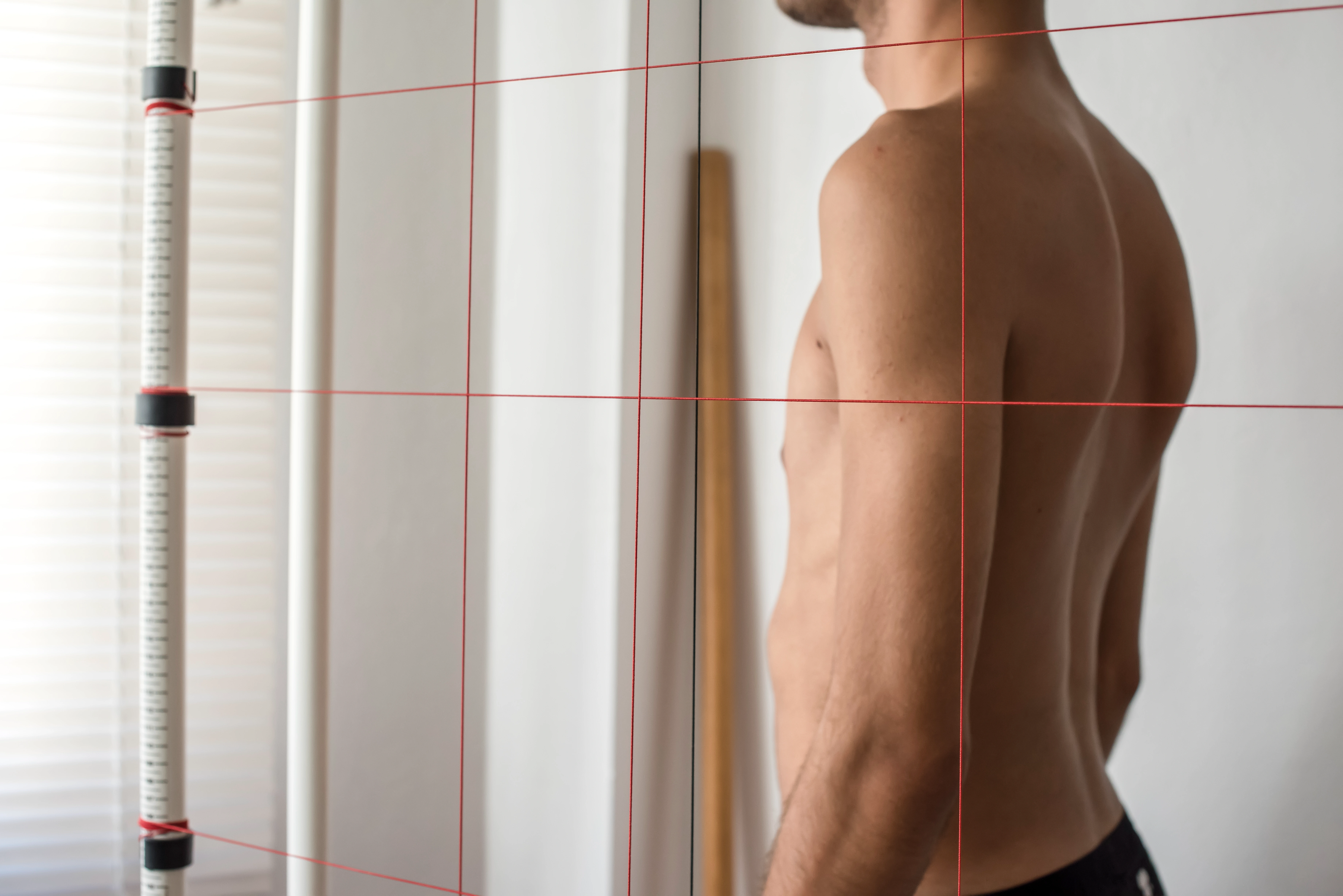
Kyphosis treatment in Dubai at DRFK Turkish Medical Center is delivered by Op. Dr. Fatih Kırar, DHA-licensed spine and neurosurgery specialist (17+ years). DRFK provides the complete kyphosis care programme from Cobb angle measurement and postural assessment through physiotherapy, TLSO bracing, pain management, and deformity correction surgery.
DRFK Turkish Medical Center is located at Villa 2, Al Athar Street, Jumeirah 3, Dubai. The clinic is easily accessible from Jumeirah, Umm Suqeim, Al Safa, Business Bay, and Downtown Dubai within around 15 minutes via Sheikh Zayed Road, with on-site parking available.
Kyphosis treatment in Dubai at DRFK Turkish Medical Center is delivered by Op. Dr. Fatih Kırar, DHA-licensed spine and neurosurgery specialist (17+ years). DRFK provides the complete kyphosis care programme from Cobb angle measurement and postural assessment through physiotherapy, TLSO bracing, pain management, and deformity correction surgery.
Whether your kyphosis is driven by desk habits and muscle imbalance or by vertebral wedging and Scheuermann's disease, treatment in Dubai at DRFK begins with accurate type and Cobb angle classification before any intervention is selected.
The thoracic spine naturally curves forward between 20° and 45°. When this curve exceeds 45–50°, or produces visible deformity, pain, or functional impairment, it is pathological kyphosis requiring specialist assessment.
Kyphosis treatment in Dubai at DRFK addresses mild postural rounding through severe structural deformity, from physiotherapy and bracing to surgical correction when indicated.
Accurate classification at DRFK determines the entire treatment pathway.
Can postural kyphosis be reversed? Yes, with physiotherapy and ergonomic correction. Surgery is never required.
Most patients improve significantly within 8–12 weeks of structured rehabilitation.
Failure of vertebral formation or segmentation from birth, may progress with growth; early surgical intervention often required.
Post-laminectomy kyphosis, adjacent segment degeneration, or loss of sagittal alignment after tumour resection, among the most complex deformity corrections at DRFK.
Progressive thoracic and thoracolumbar kyphosis from disc degeneration, facet arthrosis, and vertebral height loss, increasing forward sagittal imbalance and difficulty maintaining upright posture.
Gradual progressive leg weakness or sensory change: contact DRFK for urgent specialist assessment within 24 hours.
Sudden onset weakness or bladder dysfunction: call 999 immediately or attend emergency services.
Clinical pathway: Diagnosis → Severity classification → Treatment planning → Monitoring. No treatment begins without confirmed type, measured Cobb angle, and severity classification.
| Diagnostic tool | Kyphosis application |
|---|---|
| Standing lateral X-ray, full spine | Cobb angle, wedging, fractures, sagittal balance |
| Cobb angle measurement | <45° normal; 45–60° mild; 60–80° moderate; >80° severe |
| MRI thoracic spine | Schmorl's nodes, cord compression, disc degeneration |
| CT spine | Bone quality, fracture anatomy, surgical planning |
| DEXA bone density | Mandatory for suspected osteoporotic kyphosis |
| Pulmonary function tests | Severe thoracic kyphosis >90°, respiratory assessment |
| Neurological examination | Motor, sensory, reflexes, apex compression |
Decision flow: Mild/postural → physiotherapy + posture correction | Adolescent structural → physiotherapy + bracing | Adult moderate → physiotherapy + pain management | Severe/progressive/neurological → surgical correction
Physiotherapy (Dr. Amina Zafar): thoracic extensor strengthening, scapular retraction, pectoral stretching, core stabilisation, postural retraining, breathing exercises, neural mobilisation. Expected improvement in postural kyphosis within 8–12 weeks. Choose over surgery when Cobb angle is below surgical threshold and neurology is intact.
Posture correction therapy: workstation ergonomics, screen/phone habits, sleep position, school bag loading for adolescents.
Laser therapy: paraspinal inflammation and facet pain, 3–6 sessions for measurable relief; enables physiotherapy participation.
TLSO bracing (adolescent Scheuermann's 45°–75°, Risser 0–3): worn 16–23 hours daily, compliance is the primary determinant of outcome; less than 16 hours daily is associated with significantly reduced effectiveness. X-ray at 4–6 months; gradual weaning at skeletal maturity.
Pain management: NSAIDs, facet injection, neuropathic agents as part of integrated plan, not standalone.
Posterior instrumented fusion: Scheuermann's 70–90°, 3–6 hrs, 5–7 days stay, modified activity 3 months, full fusion 12 months.
Combined anterior-posterior: rigid curves >90°, 6–10 hrs, 7–10 days stay.
PSO / VCR: congenital, iatrogenic, rigid adult deformity, 6–12 hrs, 7–14 days stay.
MIS fusion: mild kyphotic instability at thoracolumbar junction without major global deformity.
Vertebroplasty / kyphoplasty: acute osteoporotic fracture, 45–90 mins, day case, pain relief 24–72 hours.
| Treatment | Type | Cobb angle | Corrects curve | Recovery |
|---|---|---|---|---|
| Physiotherapy + posture | Postural | Any (primary) | Yes (postural) | 8–12 weeks |
| Laser therapy | Pain control | Any | No | Immediate/ongoing |
| TLSO bracing | Adolescent Scheuermann's | 45–75°, growing | Prevents progression | During growth |
| Pain management | Symptom control | Any | No | Ongoing |
| Vertebroplasty / kyphoplasty | Osteoporotic fracture | Fracture-specific | Partial | 1–2 weeks |
| Posterior fusion | Structural >70° | >70° | Yes, significant | 3–12 months |
| Combined A-P | Rigid >90° | >90° | Yes, maximum | 3–12 months |
| PSO / VCR | Congenital, iatrogenic | Severe angular | Yes, major | 6–18 months |
History, postural assessment, hyperextension and Adams tests, neurological examination with Op. Dr. Fatih Kırar.
Standing full-spine X-ray; MRI when structural/neurological; DEXA if osteoporosis suspected, Dr. Vivek Kapoor reviews within 24 hours.
Type confirmed; Cobb quantified; severity mild/moderate/severe; written treatment plan.
Physiotherapy, bracing, laser, pain management, or surgical referral, integrated DRFK team.
Adolescents: X-ray 4–6 monthly during growth. Adults: annual review. Post-surgery: 3/6/12 month imaging.
Lead specialist
Neurosurgeon, neurospine
Brain & Spine Surgery
17+ years experience
DHA License No: 20305968-001
Op. Dr. Fatih Kırar, Full profileFounder, DRFK. DHA-licensed spine and neurosurgery, 17+ years from vertebroplasty through PSO and combined A-P correction.
| Treatment | Pain relief | Return to activity | Monitoring |
|---|---|---|---|
| Physiotherapy + posture | 4–8 weeks | Week 1 modified | 3-monthly year 1 |
| Laser therapy | 3–6 sessions | Immediate | Repeat as needed |
| TLSO bracing | Variable | Activity in brace | 4–6 monthly X-ray |
| Vertebroplasty | 24–72 hours | 1–2 weeks | Annual X-ray |
| Kyphoplasty | 24–72 hours | 1–2 weeks | Annual X-ray |
| Posterior fusion | 4–8 weeks | 3–6 months | 3/6/12 month X-ray |
| Combined A-P | 6–12 weeks | 6–12 months | 3/6/12/24 month |
| PSO / VCR | 6–12 weeks | 6–18 months | Annual imaging |
Cost depends on treatment selected, physiotherapy, bracing, kyphoplasty, or surgical correction. Personalised estimate after consultation. Most UAE plans cover documented kyphosis care; pre-authorisation managed by our team.
Standing X-ray, MRI, DEXA, structural vs postural differentiation.
Dr. Amina Zafar, thoracic extensors, scapular retraction, ergonomic retraining.
Adolescent Scheuermann's, growth-phase progression control.
Enables rehabilitation participation and daily function.
Acute osteoporotic fracture, rapid pain relief, day case.
Posterior fusion, combined A-P, PSO/VCR when criteria met, Op. Dr. Fatih Kırar.
Do not self-prescribe aggressive extension without diagnosis
Report gradual leg weakness within 24 hours; sudden bladder change, call 999
Adolescents in brace: full prescribed daily wear hours
Maintain core strengthening after symptoms resolve
Bring prior spine imaging and DEXA to consultation
Medically reviewed by Op. Dr. Fatih Kırar | DRFK Turkish Medical Center, Jumeirah 3, Dubai | Last updated: April 2026
Every day: 9:00 AM – 6:00 PM
Villa 2 Al Athar Street, Jumeirah 3, Dubai, United Arab Emirates