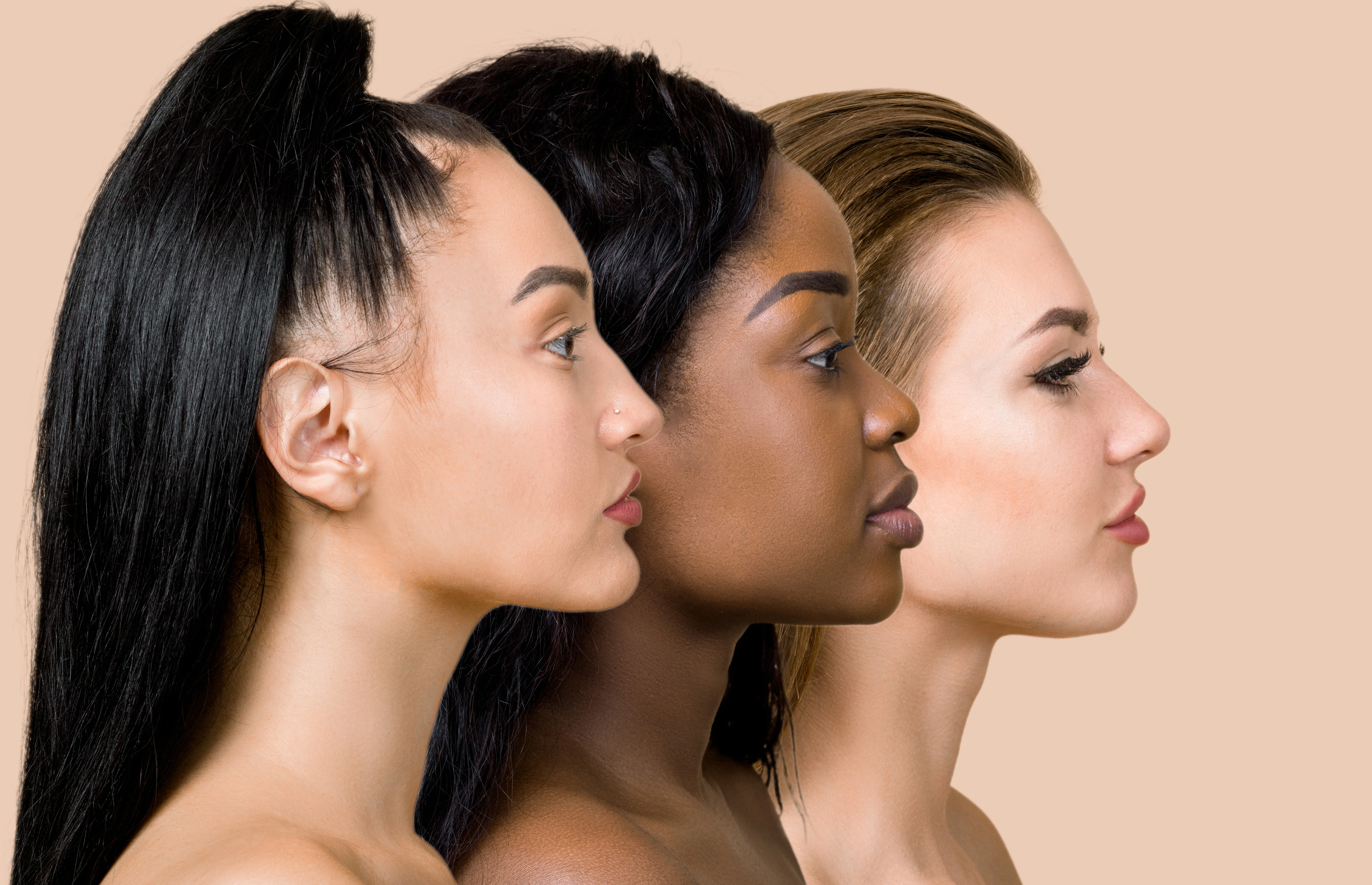
Ethnic rhinoplasty in Dubai at DRFK Turkish Medical Center is performed by Dr. Ece Kalafatlar Gül, FEBOPRAS-certified Specialist in Plastic, Reconstructive & Aesthetic Surgery (DHA-licensed, 12+ years), providing natural ethnic nose reshaping that enhances nasal aesthetics within the proportional framework of the patient's cultural identity. The fundamental principle: enhance without erasing. Refine without Westernising.
DRFK Turkish Medical Center is located at Villa 2, Al Athar Street, Jumeirah 3, Dubai. The clinic is easily accessible from Jumeirah, Umm Suqeim, Al Safa, Business Bay, and Downtown Dubai within around 15 minutes via Sheikh Zayed Road, with on-site parking available.
Ethnic rhinoplasty in Dubai at DRFK Turkish Medical Center is performed by Dr. Ece Kalafatlar Gül, FEBOPRAS-certified Specialist in Plastic, Reconstructive & Aesthetic Surgery (DHA-licensed, 12+ years), providing natural ethnic nose reshaping that enhances nasal aesthetics within the proportional framework of the patient's cultural identity. The fundamental principle: enhance without erasing. Refine without Westernising.
Consider consultation with Dr. Ece Kalafatlar Gül if you want to refine your nose while preserving ethnic character, need bridge augmentation, have a bulbous thick-skin tip, wide alar base, post-trauma distortion, or a previous rhinoplasty that Westernised your appearance.
Ethnic rhinoplasty frequently requires augmentation and cartilage grafting rather than reduction alone. Autologous septal, ear, or rib cartilage is standard at DRFK, no silicone dorsal implants.
Ethnic rhinoplasty in Dubai is rhinoplasty performed with explicit consideration of the patient's ethnic nasal morphology, using surgical techniques, aesthetic goals, and structural planning appropriate to their heritage anatomy rather than imposing a standardised Caucasian nasal template. The majority of standard rhinoplasty techniques were historically developed for Caucasian nasal anatomy, characterised by relatively thin skin, strong cartilaginous support, and a well-projected nasal bridge.
Why ethnic rhinoplasty is fundamentally different from standard rhinoplasty: Ethnicity → specific nasal anatomy (skin thickness, cartilage strength, dorsal height, alar width) → different surgical planning required → technique, graft, and augmentation selection vary → natural ethnic harmony preserved as outcome, not a Westernised nose on an ethnically featured face.
Patients of Middle Eastern, South Asian, and African heritage frequently have significantly thicker, more sebaceous nasal skin than Caucasian patients. Thick skin has two critical implications: it transmits less surgical detail, cartilage refinement beneath thick skin is visible as a general shape change rather than precise definition; and it maintains post-surgical swelling for longer, tip definition may require 12–18 months to emerge fully.
East Asian, African, and some South Asian nasal anatomies feature a low dorsal profile, a flat nasal bridge with little projection from the face when viewed from the lateral profile. Standard hump reduction approaches are entirely inappropriate here. Ethnic rhinoplasty for low nasal bridge correction requires augmentation, building the dorsum using autologous cartilage grafts (septal, ear, or rib cartilage).
Many ethnic nasal anatomies, particularly East Asian, African, and some Middle Eastern, have weaker lower lateral cartilages than Caucasian noses. Weak cartilage without structural support produces nasal tip collapse over time following tip rhinoplasty. Structural reinforcement through septal extension grafts, columellar strut grafts, and tip support sutures are standard components of ethnic tip rhinoplasty.
A wide nasal base, alar base width disproportionate to the intercanthal distance, is common across multiple ethnic groups. Alar base reduction narrows the external nasal width by removing a precise wedge of tissue at the alar base.
The most important conceptual distinction between standard and ethnic rhinoplasty is the direction of change. Standard rhinoplasty focuses on reduction, hump removal, tip de-projection, alar reduction. Ethnic rhinoplasty frequently requires the opposite: building the nasal bridge, adding tip projection, and creating structural support where it is absent. Autologous cartilage grafts, harvested from the septum, ear, or rib, provide permanent, biocompatible structural building material without implant-related risks.
The most common presentation: dorsal hump + thick skin + bulbous tip. The correct surgical approach combines controlled hump reduction (often less than aesthetically apparent, because dorsal reduction without structural support produces pollybeak deformity in thick-skin patients), structural tip refinement with support sutures and grafts, and, where indicated, alar base reduction.
| Phase | Thin Skin | Thick Skin |
|---|---|---|
| Splint removal | Day 7 | Day 7 |
| Social presentability | 1–2 weeks | 2–3 weeks |
| Near-final result visible | 3–6 months | 6–12 months |
| Tip definition full emergence | 6 months | 12–18 months |
| Final assessment | 6 months | 12 months |

Lead specialist
Specialist in Plastic, Reconstructive & Aesthetic Surgery
Plastic & Aesthetic Surgery
12+ years experience
Dr. Ece Kalafatlar Gül, Full ProfileDr. Ece Kalafatlar Gül is a FEBOPRAS-certified Specialist in Plastic, Reconstructive & Aesthetic Surgery at DRFK with 12+ years of experience in ethnic rhinoplasty, structural cartilage grafting, and identity-preserving nasal reshaping for Middle Eastern, South Asian, East Asian, and African heritage patients.
Ethnic rhinoplasty in Dubai is rhinoplasty planned specifically for the patient's ethnic nasal anatomy, using techniques appropriate to their heritage (augmentation for low nasal bridge, structural support for thick skin and weak cartilage, alar base reduction for wide nasal base), with the explicit goal of enhancing nasal aesthetics while preserving cultural identity.
Standard rhinoplasty techniques were developed for Caucasian nasal anatomy, thin skin, strong cartilage, well-projected bridge. Ethnic noses frequently have thick skin, weaker cartilage, and require augmentation rather than reduction. Applying standard technique templates to ethnic anatomies produces surgical-looking results and early structural failure.
Thick skin limits visible tip definition, structural rhinoplasty with strong tip support grafts produces an achievable result in thick-skin patients. Full result emergence takes 12–18 months.
Ethnic facial proportion analysis, skin thickness assessment, structural evaluation, and cartilage graft planning. Digital photography and simulation with honest achievable goals.
Blood panel, anaesthetic assessment with Dr. Zahra Ghafari. Written medication cessation and fasting instructions.
General anaesthesia, ISO-compliant theatre. Duration 2–4 hours depending on grafting. Open approach in the majority of ethnic cases for full framework access.
Splint 7 days. Thick skin: longer swelling; social presentability 2–3 weeks. Tip definition emerges over 6–18 months.
Month 3, 6, and 12 assessments tracking tip definition and graft stability.
Thick-skin patients: do not judge result before 12 months
Sleep elevated; avoid glasses on the nose until cleared
No contact sport for 12 weeks
Sun protection on healing nasal skin for 6 months
Attend all follow-ups, month 3, 6, and 12
Experiences shared by patients after consultation or treatment.
“As a Middle Eastern woman, I was very concerned about losing my identity with a nose job. Dr. Ece Kalafatlar Gül understood this immediately and the result is a refined, natural nose that still looks like me. The structural approach made all the difference.”
Fatima K. — Verified Google Review
“Had my nasal bridge augmented with rib cartilage at DRFK. The result is exactly what I wanted natural, feminine, and proportionate to my face. No implant concerns, no artificial look.”
Ji-Young P. — Verified Google Review
“I previously had a rhinoplasty elsewhere that made me look like I had a European nose. Dr. Ece Kalafatlar Gül performed revision ethnic rhinoplasty and restored my appearance. The difference is remarkable. I finally look like myself again.”
Amara O. — Verified Google Review
Medical & surgical services | Patient-centered care
Medically reviewed by Dr. Ece Kalafatlar Gül, Specialist in Plastic, Reconstructive & Aesthetic Surgery | DRFK Turkish Medical Center, Jumeirah 3, Dubai | Last updated: April 2026
Every day: 9:00 AM – 6:00 PM
Villa 2 Al Athar Street, Jumeirah 3, Dubai, United Arab Emirates