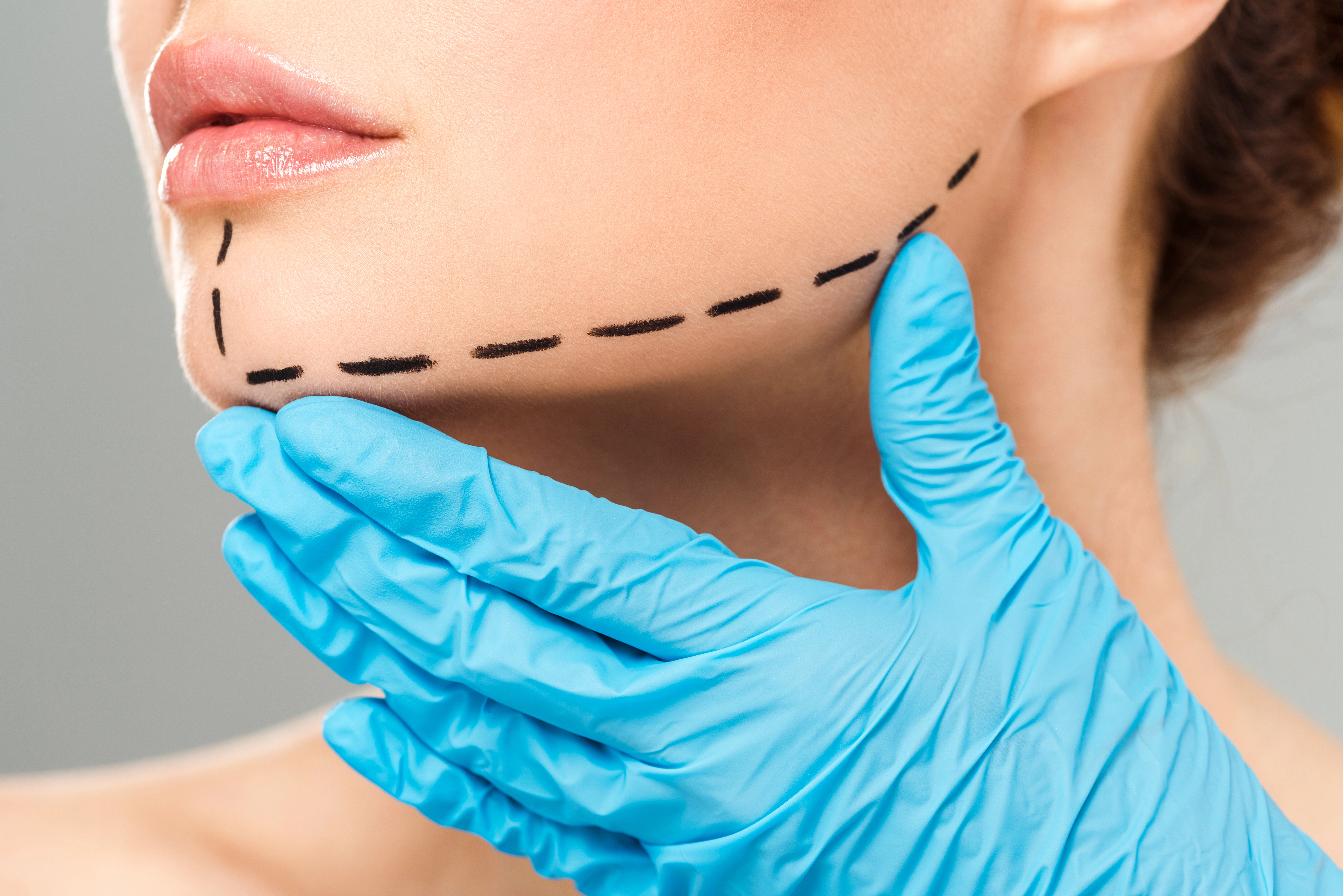
Chin augmentation is a facial contouring procedure designed to improve chin projection, jawline definition, and overall facial balance. Treatment options may include chin implants, sliding genioplasty, or non-surgical enhancement, depending on facial anatomy, profile assessment, and aesthetic goals. At DRFK Turkish Medical Center, Jumeirah 3, surgery is performed by Dr. Ece Kalafatlar Gül, FEBOPRAS-certified Plastic Surgeon.
DRFK Turkish Medical Center is located at Villa 2, Al Athar Street, Jumeirah 3, Dubai. The clinic is easily accessible from Jumeirah, Umm Suqeim, Al Safa, Business Bay, and Downtown Dubai within around 15 minutes via Sheikh Zayed Road, with on-site parking available.
Chin augmentation in Dubai at DRFK Turkish Medical Center, Dr. Ece Kalafatlar Gül, FEBOPRAS-certified Specialist in Plastic, Reconstructive & Aesthetic Surgery (DHA-licensed, 12+ years), delivers chin implant surgery, sliding genioplasty, and coordination of chin filler assessment for weak chin correction, recessed chin, and facial profile balance restoration. Structured profile analysis determines when the chin, not rhinoplasty, is the primary lever for facial harmony.
Consult Dr. Ece Kalafatlar Gül if your profile shows a weak chin, you considered rhinoplasty because your nose appears prominent, jawline definition is poor, or prior chin filler gave temporary improvement you want to make permanent.
Many rhinoplasty candidates discover at consultation that nasal prominence is magnified by chin deficiency. Chin augmentation alone can harmonise profile proportions without nasal surgery when anatomy supports it.

Lead specialist
Specialist in Plastic, Reconstructive & Aesthetic Surgery
Plastic & Aesthetic Surgery
12+ years experience
Dr. Ece Kalafatlar GülChin augmentation is a facial contouring procedure that improves the projection and shape of the chin to enhance profile balance and lower facial definition. It can be performed using a chin implant, surgical repositioning of the chin bone, or, for minor adjustments, injectable fillers. At DRFK Turkish Medical Center, surgical chin augmentation is performed by Dr. Ece Kalafatlar Gül, a Specialist in Plastic, Reconstructive and Aesthetic Surgery with 12+ years of experience.
The chin anchors the lower third of the face, so improving its projection often has a noticeable effect on overall facial harmony.
Chin projection plays an important role in overall facial proportions and profile balance. A recessed chin may affect the relationship between the nose, lips, jawline, and lower facial third. Chin augmentation is often planned after evaluating skeletal anatomy, soft tissue characteristics, and facial profile measurements to achieve balanced proportions.
A weak or retruded chin can make the nose appear larger and the jawline less defined in profile, even when those features are normal. This is why chin projection is assessed in the context of the whole face, and why some patients combine chin augmentation with rhinoplasty for overall profile balance.
Chin projection is evaluated through profile analysis, facial measurements, and assessment of both the skeletal structure and the overlying soft tissue. This determines how much projection is needed and which method will achieve a balanced result.
The assessment considers the position of the chin relative to the lips and nose, the strength of the jawline, and the thickness of the soft tissue chin pad. Evaluating the skeleton and soft tissue together is essential, since the same external appearance can have different underlying causes, which guides whether an implant, genioplasty, or filler is most appropriate.
A chin implant is a medical device placed over the chin bone to improve projection, contour, and lower facial balance. Implant selection is based on facial anatomy, profile analysis, and aesthetic goals to create proportional enhancement while maintaining harmony with surrounding facial structures.
Chin implants come in different shapes and sizes to suit individual anatomy, and they are placed through a small, concealed incision. As a structural solution, a chin implant provides durable, long-term projection, which is why it is a common choice for patients with a genuinely recessed chin rather than a minor contour concern.
Chin implants provide structural enhancement through surgical placement of an implant, while fillers temporarily add volume using injectable materials. The most suitable option depends on the degree of projection needed, treatment goals, anatomy, and desired longevity of results.
For minor adjustments, jawline fillers and chin filler offer a non-surgical option, while a chin implant or genioplasty suits patients needing greater, lasting projection.
| Factor | Chin Implant | Chin Fillers |
|---|---|---|
| Method | Surgical | Injectable |
| Projection | Significant, structural | Modest, temporary |
| Longevity | Long-term | Maintenance needed |
| Best for | True chin deficiency | Minor contour refinement |
Both a chin implant and a sliding genioplasty increase chin projection, but they do so differently, and the right choice depends on the degree and direction of correction needed. An implant adds to the existing bone, while genioplasty repositions the patient's own bone.
Sliding genioplasty involves surgically moving a section of the chin bone forward and fixing it in the new position, which suits larger corrections or cases needing vertical adjustment. A chin implant is often simpler for straightforward projection. Dr. Ece Kalafatlar Gül advises which approach matches the anatomy and goals.
Chin aesthetics differ between men and women, and a natural result respects these differences rather than applying one standard. The goal is balance appropriate to the individual face.
A masculine chin is typically broader, stronger, and more projected, supporting a defined jawline. A feminine chin is usually softer, more tapered, and proportionate to the lips and nose. Understanding these profile goals is part of planning a chin augmentation surgery that looks natural for the individual patient.
Chin augmentation often improves jawline definition because the chin and jawline work together to frame the lower face. Increasing chin projection can sharpen the transition between the neck and jaw, creating a more defined profile.
For patients seeking overall lower-face contouring, chin enhancement may be combined with jawline treatment for a balanced result. This relationship between chin projection and jawline definition is why the lower face is assessed as a whole rather than the chin in isolation.
Chin augmentation is performed under anaesthesia, and recovery is generally straightforward. Most patients experience swelling and mild discomfort that settle over the first weeks, with a soft diet and activity guidance early on, and the final contour emerging as swelling fully resolves.
Long-term outcomes depend on the method used. Chin implants and sliding genioplasty are generally durable solutions for improving chin projection, while non-surgical approaches such as fillers may require maintenance treatments over time. Stable, lasting projection is one reason many patients choose a surgical option for true chin deficiency.
DRFK Turkish Medical Center is a DHA-licensed, ISO-compliant facility in Jumeirah 3 with hybrid operating suites supporting facial contouring surgery, specialist anaesthesia, and structured recovery. Surgical planning uses calibrated photography and profile analysis, with follow-up care built into every procedure.
The clinic serves patients from Jumeirah, Umm Suqeim, Al Safa, Al Wasl, City Walk, Business Bay, Downtown Dubai, DIFC, Dubai Marina, Palm Jumeirah, JBR, Emirates Hills, Dubai Hills, and Arabian Ranches, with multilingual support for international patients. Surgery is performed by Dr. Ece Kalafatlar Gül, FEBOPRAS-certified Plastic Surgeon and ISAPS member.
Facial profile analysis, E-plane measurement, filler vs implant vs genioplasty decision, simulation photography.
Blood panel, anaesthetic assessment.
Local anaesthesia or general (depending on procedure). Implant: 45–60 minutes. Genioplasty: 1.5–2 hours.
Soft diet for 2 weeks. No hard or crunchy foods. Chin taping or binder where indicated.
Day 7, Week 3, Month 3.
Maintain soft diet for the full advised period, implant 2 weeks, genioplasty up to 4 weeks
Sleep with head elevated for the first week to reduce swelling
Avoid contact sports until cleared at follow-up
Attend all follow-ups, day 7, week 3, month 3
Experiences shared by patients after consultation or treatment.
“I came for rhinoplasty. Dr. Ece Kalafatlar Gül told me my nose was fine and my chin was the issue. Chin augmentation changed my profile completely and I never needed a nose job.”
Omar B. — Verified Google Review
“Had chin implant combined with rhinoplasty. The profile result is extraordinary, exactly what simulation showed. Recovery was faster than I expected.”
Ana M. — Verified Google Review
Medical & surgical services | Patient-centered care
Medically reviewed by Dr. Ece Kalafatlar Gül, FEBOPRAS Plastic Surgeon, DRFK Turkish Medical Center, Jumeirah 3, Dubai.
Every day: 9:00 AM – 6:00 PM
Villa 2 Al Athar Street, Jumeirah 3, Dubai, United Arab Emirates