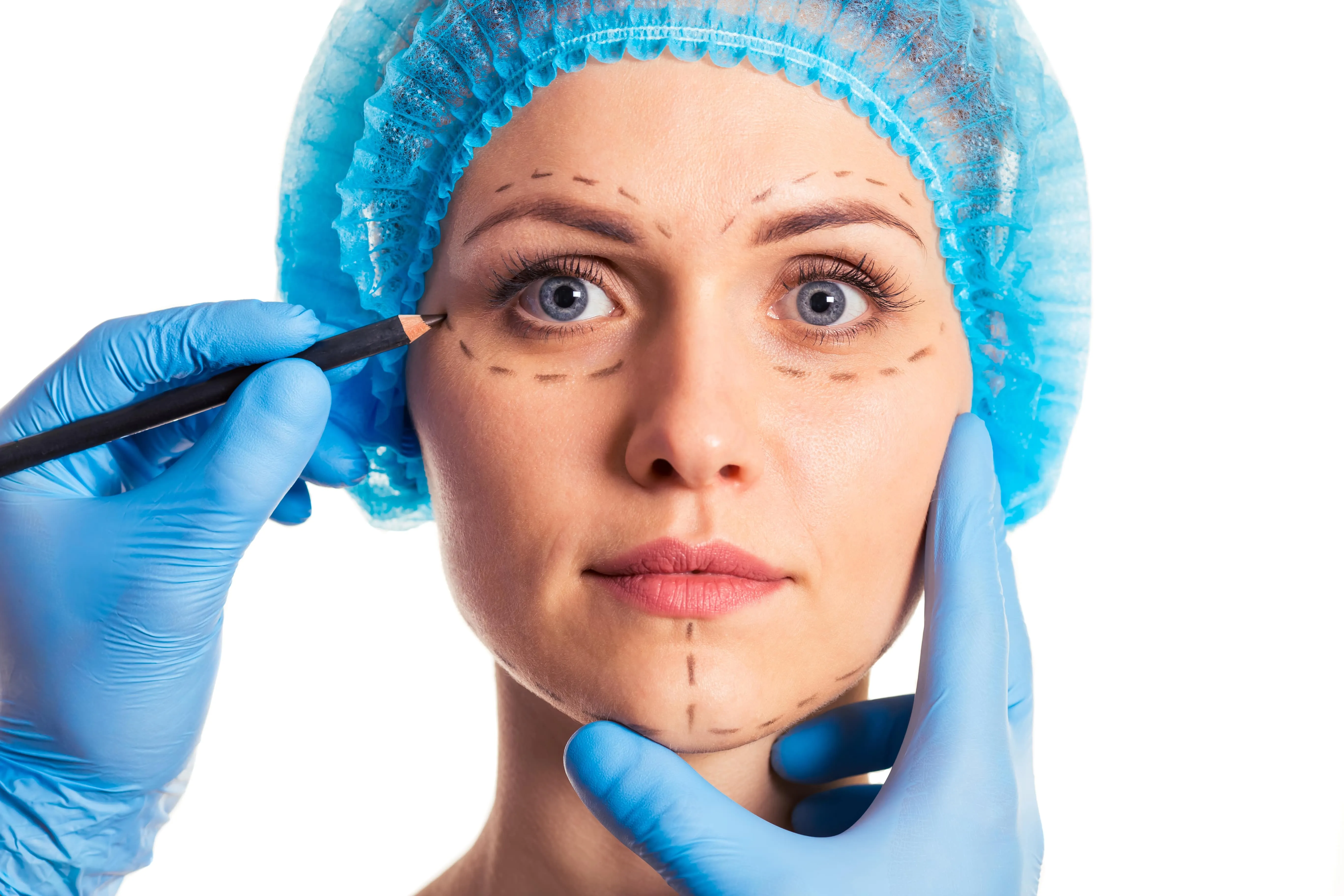
Dr. Ece Kalafatlar Gül, specialist in plastic, reconstructive & aesthetic surgery at DRFK, performs upper and lower blepharoplasty, correcting hooded eyes, droopy upper lids, and under-eye bags. Modern fat repositioning (not aggressive removal) produces a refreshed, natural result. Visual field testing is available when documenting functional ptosis for insurance.
DRFK Turkish Medical Center is located at Villa 2, Al Athar Street, Jumeirah 3, Dubai. The clinic is easily accessible from Jumeirah, Umm Suqeim, Al Safa, Business Bay, and Downtown Dubai within around 15 minutes via Sheikh Zayed Road, with on-site parking available.
Modern lower blepharoplasty repositions herniated orbital fat over the orbital rim, filling the tear trough and producing a smooth eyelid-to-cheek transition. At DRFK, fat is removed only when genuinely excessive, never aggressively.
When upper eyelid skin descends below the pupil, peripheral visual field is compromised. Visual field testing documents the obstruction and may qualify for UAE insurance coverage. DRFK prepares the pre-authorisation documentation.
Blepharoplasty is the surgical correction of the periorbital region, removing, repositioning, or tightening the excess skin, orbital fat pads, and weakened orbicularis oculi muscle of the upper and lower eyelids that produce a tired, aged, or hooded eye appearance. Unlike non-surgical treatments that temporarily improve skin texture or reduce volume, eyelid surgery addresses the structural anatomical changes, skin laxity, herniated fat, and muscle laxity, that create persistent eye region aging.
Core mechanism: Aging → skin loses elasticity + muscle weakens + orbital fat herniates forward → droopy lids + eye bags → blepharoplasty → removes / repositions excess skin and fat → restores youthful eye contour.
Excess upper eyelid skin (dermatochalasis): Redundant upper eyelid skin folds downward onto the eyelash line producing the characteristic hooded eye appearance. Upper eyelid surgery removes this excess skin through a crease-line incision that heals within the natural lid crease.
Functional ptosis, visual field obstruction: When upper eyelid skin or true ptosis (levator muscle laxity) causes the lid to descend below the pupil, peripheral visual field is compromised. This functional blepharoplasty indication may qualify for UAE insurance coverage with a visual field test documenting the obstruction.
Eyebrow descent contributing to hooding: Ptotic (descended) eyebrows push skin onto the upper eyelid, compounding skin excess. Dr. Ece Kalafatlar Gül assesses the eyebrow-eyelid relationship at consultation, because brow lift, not blepharoplasty alone, may be the correct treatment when eyebrow descent is the primary driver.
Orbital fat herniation (eye bags): The orbital fat pads herniate forward through the weakened lower eyelid septum with age, creating persistent under-eye puffiness that sleep and non-surgical treatments cannot address. Eye bag removal Dubai surgically repositions or removes this herniated fat.
Fat repositioning vs fat removal, the modern approach: Modern techniques reposition the herniated fat over the orbital rim into the tear trough depression, smoothing the eyelid-to-cheek transition and preventing the hollow, operated appearance that aggressive fat removal produces.
Tear trough deformity: The groove between the lower eyelid and cheek deepens with age. Combined fat repositioning and, where indicated, filler or implant augmentation addresses this complex periorbital change.
Lower eyelid laxity: Weakness of the lower eyelid support structures (canthal tendons) allowing the lid to sag. Requires lateral canthal tightening alongside fat management.
Aging causes progressive skin collagen and elastin loss, orbicularis oculi muscle weakening, orbital septum laxity, and anterior herniation of orbital fat pads. Genetics significantly determine the rate and pattern of periorbital aging, some patients show significant fat herniation in their 30s; others maintain firm lower eyelids into their 60s. UV exposure, smoking, and repeated facial expression accelerate periorbital aging.
Every blepharoplasty assessment at DRFK includes a structured periorbital analysis before any surgical plan is confirmed.
| Assessment | Purpose |
|---|---|
| Eyelid Laxity Assessment | Skin excess, tissue distensibility, snap test, technique selection |
| Orbital Fat Analysis | Fat herniation extent, repositioning vs partial removal decision |
| Visual Field Assessment | Peripheral vision obstruction quantification, functional indication documentation |
| Eyebrow-Eyelid Relationship | Confirms whether brow descent contributes to upper lid hooding |
| Tear Trough Evaluation | Depth and extent, fat repositioning vs filler combination |
| Dry Eye Assessment | Tear film and Schirmer test, lower blepharoplasty risk stratification |
| Upper Blepharoplasty | Lower Blepharoplasty | |
|---|---|---|
| Primary problem | Excess skin, hooding | Orbital fat herniation, bags |
| Functional component | Visual field obstruction (may be insured) | Rarely |
| Incision | Eyelid crease (hidden) | Subciliary or transconjunctival |
| Fat management | Medial fat pad if bulging | Repositioning or partial removal |
| Recovery | 1–2 weeks | 1–2 weeks |
| Best for | Tired/aged upper eyes | Under-eye puffiness and bags |
Crease-line incision within the natural upper eyelid fold, removing the precise amount of excess skin, and where indicated the bulge of herniated medial orbital fat. The incision heals within the eyelid crease and becomes imperceptible within 3–4 months.
Best for: Excess upper eyelid skin causing hooding, tired appearance, or visual field obstruction. Duration: 45–60 mins | Local anaesthesia + sedation | Day case | Desk Return: 1 week.
Subciliary incision (below the lower lash line) or transconjunctival approach (inside the lower eyelid, no external scar) accessing and repositioning or partially removing the herniated orbital fat pads.
Best for: Orbital fat herniation producing under-eye bags and lower eyelid puffiness. Duration: 45–90 mins | Day case | Desk Return: 1–2 weeks.
Transconjunctival blepharoplasty (no-scar lower blepharoplasty): The preferred approach for fat repositioning without skin removal, incision placed entirely inside the lower eyelid, leaving no external scar. Suitable when skin excess is not the primary concern.
Four-lid blepharoplasty addressing upper and lower eyelids in a single surgical episode for patients with both upper hooding and lower puffiness, the most common presentation in patients over 40.
Duration: 1.5–2.5 hrs | Day case | Desk Return: 1–2 weeks.
The shift from fat removal to fat repositioning represents the most important advance in lower blepharoplasty over the past decade. Aggressive fat removal produces the hollow, sunken lower eyelid that characterises "operated" eyes, a result that looks worse than natural aging.
Fat repositioning drapes the herniated fat over the orbital rim, filling the tear trough depression and producing a smooth, continuous transition from eyelid to cheek, the natural youthful periorbital anatomy. At DRFK, eye bag removal employs fat repositioning as the preferred technique, removing fat only when volume is genuinely excessive, never aggressively.
| Step | What Happens |
|---|---|
| 01, Consultation | Periorbital assessment, fat analysis, visual field test, technique selection |
| 02, Planning | Eyelid marking, fat repositioning vs removal decision, scar placement |
| 03, Pre-Op | Blood panel, ophthalmology clearance where visual field involved, anaesthetic review |
| 04, Surgery | Blepharoplasty under local anaesthesia + sedation or general anaesthesia |
| 05, Week 1–2 | Cold compresses, eye lubrication, limited screen time; suture removal Day 5–7 |
| 06, Month 1–3 | Progressive improvement; final result; scar assessment |
Do eye bags come back after blepharoplasty? Fat repositioned or partially removed during blepharoplasty does not regenerate. Remaining orbital fat may herniate further with age, but significantly less rapidly than before surgery. The correction is durable and lasting.
Post-operative guidance: Lubricating eye drops as prescribed, essential for the first 2–4 weeks. No contact lenses for 2 weeks. No rubbing the eyes. Sleep with head elevated for 2 weeks. Sunglasses outdoors for 4 weeks (UV protection for healing eyelid skin).
| Phase | Timeline | What to Expect |
|---|---|---|
| Immediate | Day 1–3 | Swelling, bruising (especially lower lids), cold compresses every 2 hours |
| Suture Removal | Day 5–7 | Upper lid sutures out; significant improvement in appearance |
| Resolution | Week 1–2 | Most bruising resolved; socially presentable with light camouflage |
| Progressive | Week 2–4 | Residual swelling and firmness continue to resolve |
| Final Result | Month 1–3 | Full result visible; scar maturation |
| Maturation | Month 3–6 | Scar complete; full result assessment |

Lead specialist
Specialist in Plastic, Reconstructive & Aesthetic Surgery
Plastic & Aesthetic Surgery
12+ years experience
Dr. Ece Kalafatlar Gül, Full ProfileDr. Ece Kalafatlar Gül is a FEBOPRAS-certified Specialist in Plastic, Reconstructive & Aesthetic Surgery at DRFK with 12+ years of experience in upper and lower blepharoplasty, periorbital rejuvenation, and functional eyelid surgery within a DHA-licensed, hospital-grade facility.
Crease-line incision removing excess upper eyelid skin and medial fat where indicated. 45–60 mins | Day case | Desk return: 1 week.
Fat repositioning or partial removal via subciliary or transconjunctival approach. 45–90 mins | Day case | Desk return: 1–2 weeks.
Upper and lower in single session, most common presentation over 40. 1.5–2.5 hrs | Day case | Desk return: 1–2 weeks.
No-scar lower blepharoplasty, incision inside the lower eyelid for fat management without skin removal.
Eyelid laxity, orbital fat analysis, visual field test, tear trough evaluation, dry eye screen (Schirmer test).
Share every medication and supplement, especially aspirin, NSAIDs, anticoagulants, and MAOIs, and any history of dry eye or previous eye surgery before planning.
Arrange a responsible adult to accompany you home after anaesthesia; plan time off screens and strenuous activity while swelling and sutures heal.
Do not wear eye makeup until your surgeon clears you; keep follow-up visits for suture removal and wound checks.
Every day: 9:00 AM – 6:00 PM
Villa 2 Al Athar Street, Jumeirah 3, Dubai, United Arab Emirates