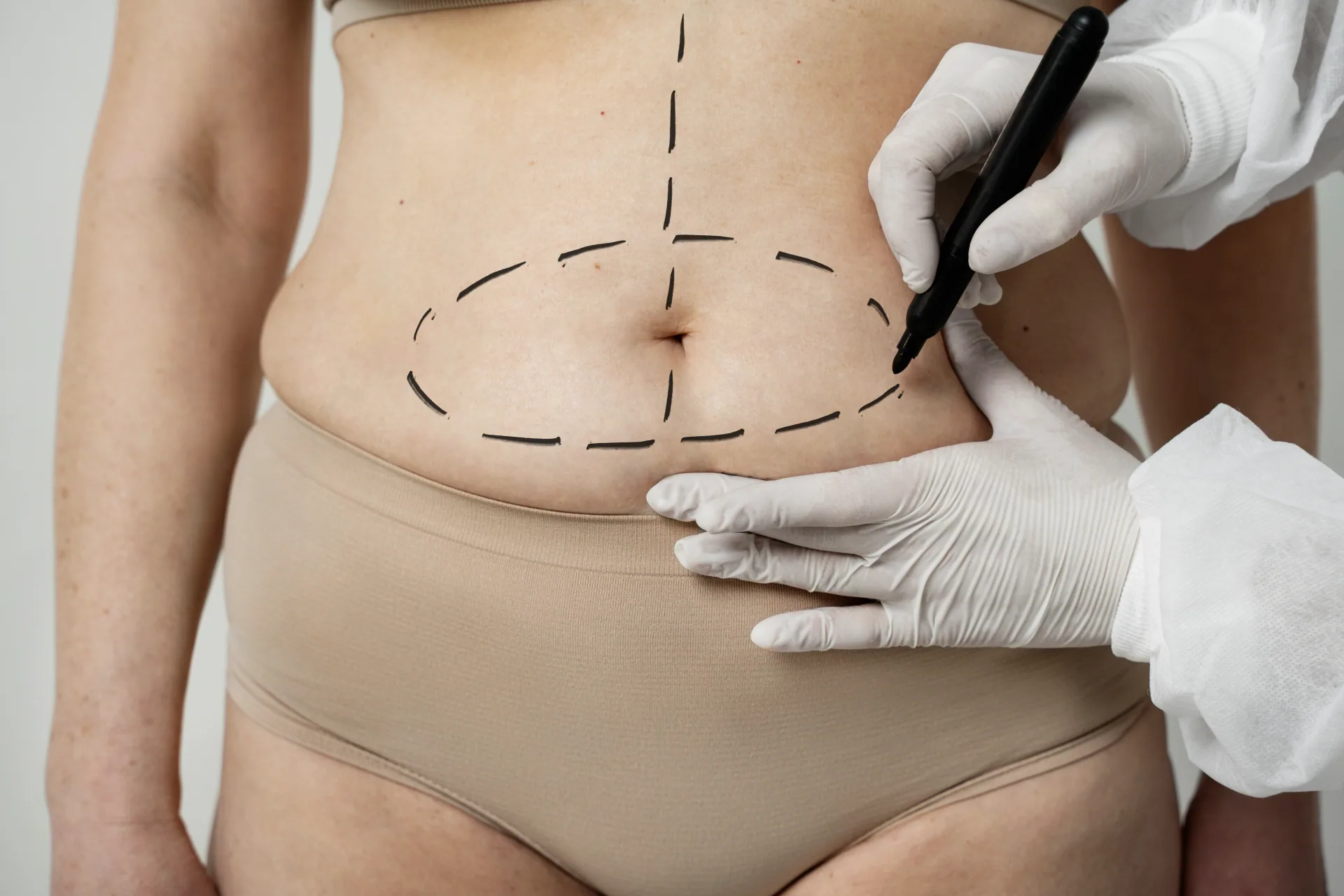
A tummy tuck, also known as abdominoplasty, is a surgical procedure that removes excess abdominal skin and may repair weakened abdominal muscles. It is commonly considered after pregnancy, significant weight loss, or age-related skin laxity to improve abdominal contour and core support. At DRFK Turkish Medical Center, Jumeirah 3, surgery is performed by Dr. Ece Kalafatlar Gül, FEBOPRAS-certified Plastic Surgeon.
DRFK Turkish Medical Center is located at Villa 2, Al Athar Street, Jumeirah 3, Dubai. The clinic is easily accessible from Jumeirah, Umm Suqeim, Al Safa, Business Bay, and Downtown Dubai within around 15 minutes via Sheikh Zayed Road, with on-site parking available.
If diet and exercise alone cannot address loose skin, weakened muscles or stubborn abdominal fat, abdominoplasty restores tone. It is especially effective after pregnancy (diastasis recti) or major weight loss.
We customise the technique to your body:

Lead specialist
Specialist in Plastic, Reconstructive & Aesthetic Surgery
Plastic & Aesthetic Surgery
12+ years experience
Dr. Ece Kalafatlar GülExcess abdominal skin and muscle laxity develop when the abdominal wall is stretched beyond its ability to recover, most often after pregnancy, major weight loss, or aging. The skin loses elasticity, fat distribution changes, and the muscles can separate, leaving a contour that diet and exercise cannot fully correct.
Pregnancy stretches both skin and muscle; significant weight loss leaves redundant skin; and aging reduces skin elasticity. Understanding which of these is driving the change matters, because it determines whether a full or mini abdominoplasty, with or without muscle repair, is appropriate. Dr. Ece Kalafatlar Gül assesses this before recommending surgery.
Diastasis recti is a separation of the rectus abdominis muscles, commonly occurring after pregnancy or significant weight fluctuations, producing a persistent abdominal bulge and weakened core support. During a tummy tuck, the surgeon may repair the abdominal wall by bringing the separated muscles back together.
This muscle repair is what distinguishes abdominoplasty from skin removal alone. By restoring the abdominal wall, the procedure improves both contour and core support. Suitability depends on the degree of separation, skin laxity, and overall abdominal anatomy, which Dr. Ece Kalafatlar Gül evaluates during the surgical assessment.
Suitable candidates are healthy adults with excess abdominal skin, muscle laxity, or diastasis recti who are at a stable weight and have realistic expectations. The procedure is commonly chosen by women after pregnancy and by patients after significant weight loss.
Candidacy depends on skin elasticity, the degree of muscle separation, overall health, and whether weight is stable, since future pregnancy or major weight change can affect results. Patients still planning pregnancy or significant weight loss are usually advised to wait. A full medical assessment is part of every consultation.
A mini tummy tuck primarily targets excess skin and tissue below the navel, while a full tummy tuck addresses a larger portion of the abdomen and may include repair of abdominal muscle separation. The most appropriate option depends on the amount of excess skin, abdominal laxity, and treatment objectives.
An extended tummy tuck may be considered after massive weight loss where skin laxity extends to the flanks. Dr. Ece Kalafatlar Gül recommends the option matched to the anatomy, not a fixed package.
| Factor | Mini Tummy Tuck | Full Tummy Tuck |
|---|---|---|
| Area | Below the navel | Whole abdomen |
| Muscle repair | Limited or none | Often included |
| Scar | Shorter | Longer, hip to hip |
| Best for | Minor lower-abdomen laxity | Significant skin and muscle laxity |
Yes, a tummy tuck can be combined with liposuction to refine the waistline and flanks while removing excess skin and repairing muscle. This combination, sometimes part of a mommy makeover, addresses both fat and skin laxity together for a more complete contour.
Whether combination is appropriate depends on health, the amount of fat and skin involved, and safe operating time. The decision is made during surgical planning with patient safety as the priority.
A tummy tuck is performed under general anaesthesia. Excess skin is removed, the abdominal muscles are repaired if separated, and the remaining skin is re-draped for a smoother contour, with the scar placed low so it can be concealed by underwear or swimwear.
Recovery progresses in stages. Most patients resume light daily activities within a few weeks, while strenuous activity and exercise require additional recovery time. Following postoperative instructions, including movement guidance and support garments, plays an important role in healing and long-term outcomes. Scar maturation continues over many months as the line fades.
Long-term results depend on maintaining a stable weight and avoiding future pregnancy after surgery, since both can stretch the repaired abdominal wall again. The muscle repair and skin removal are durable, but significant weight gain or pregnancy can alter the contour.
This is why surgical planning includes a discussion of timing and future plans. Patients who maintain a stable weight and a healthy lifestyle typically retain their results well, and revision surgery is available in the minority of cases where it is needed.
DRFK Turkish Medical Center is a DHA-licensed, ISO-compliant facility in Jumeirah 3 with hybrid operating suites supporting body contouring surgery, specialist anaesthesia, and structured post-operative recovery. Surgical planning uses calibrated photography baselines, and follow-up care is built into every procedure.
The clinic serves patients from Jumeirah, Umm Suqeim, Al Safa, Al Wasl, City Walk, Business Bay, Downtown Dubai, DIFC, Dubai Marina, Palm Jumeirah, JBR, Emirates Hills, Dubai Hills, and Arabian Ranches, with multilingual support for international patients. Surgery is performed by Dr. Ece Kalafatlar Gül, FEBOPRAS-certified Plastic Surgeon.
Evaluation of skin elasticity, muscle tone and fat distribution.
Suturing of separated rectus muscles, critical after pregnancy.
Sculpting of the flanks, hips and upper abdomen for a refined silhouette.
Removal of loose lower-abdomen skin with a low, easily hidden scar.
Recreation of a natural, vertical belly button position.
Be at a stable weight for at least 6 months before surgery
Stop smoking 4 weeks before and after, smoking dramatically slows healing
Walk gently from day 1 to reduce clot risk
Sleep in a "beach chair" position for 2 weeks
Medically reviewed by Dr. Ece Kalafatlar Gül, FEBOPRAS Plastic Surgeon, DRFK Turkish Medical Center, Jumeirah 3, Dubai.
Every day: 9:00 AM – 6:00 PM
Villa 2 Al Athar Street, Jumeirah 3, Dubai, United Arab Emirates