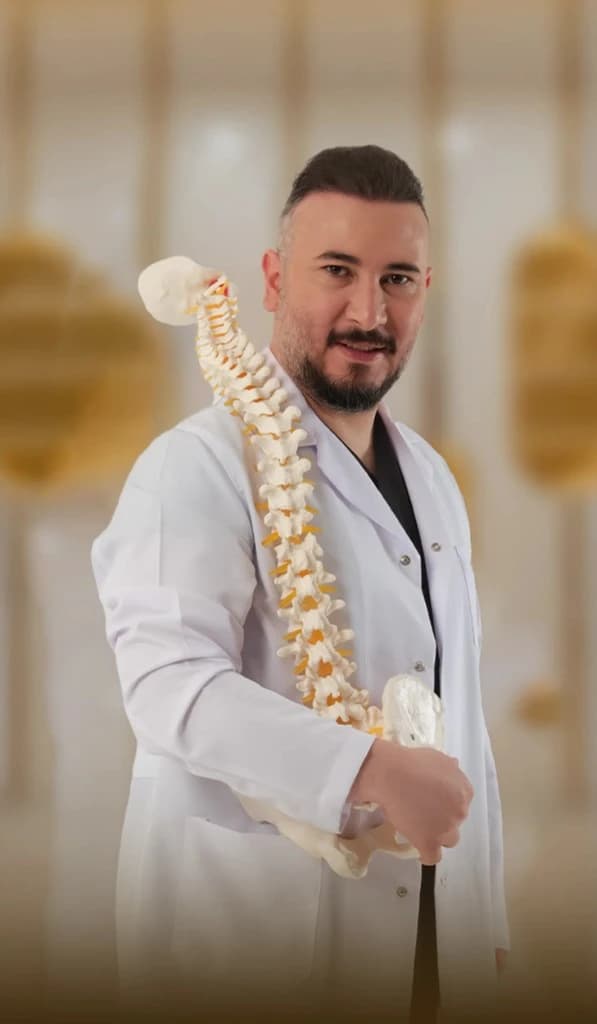
Movement Disorder Surgery in Dubai, Deep Brain Stimulation by Op. Dr. Fatih Kırar
Movement disorder surgery in Dubai at DRFK Turkish Medical Center is performed by Op. Dr. Fatih Kırar, a DHA-licensed neurosurgery specialist with 17+ years of experience and performed, delivering deep brain stimulation (DBS), stereotactic brain surgery, and functional neurosurgery for Parkinson's disease, essential tremor, and dystonia when medication alone has failed to maintain adequate quality of life.
DHA-licensed neurosurgery specialist, functional brain surgery
Deep brain stimulation (DBS) in Dubai, Parkinson's & tremor
Movement Disorder Surgery in Dubai, Deep Brain Stimulation by Op. Dr. Fatih Kırar
Health Unit
DRFK Turkish Medical Center is located at Villa 2, Al Athar Street, Jumeirah 3, Dubai. The clinic is easily accessible from Jumeirah, Umm Suqeim, Al Safa, Business Bay, and Downtown Dubai within around 15 minutes via Sheikh Zayed Road, with on-site parking available.
Need a Consultation?
Book your appointment with our expert specialists today.
Surgical movement disorder care at DRFK
This page focuses on the surgical management of movement disorders. For the medical management of Parkinson's disease, epilepsy, and other neurological conditions, visit our Neurology Hub.
What Are Movement Disorders? Understanding the Neurological Basis
Movement disorders are neurological conditions that produce abnormal, involuntary, or poorly controlled voluntary movement arising from dysfunction in the brain's movement control circuitry, particularly the basal ganglia and thalamus.
Understanding this neurological basis explains why movement disorder surgery in Dubai, specifically deep brain stimulation, is both scientifically rational and clinically transformative.
The Brain Circuit Behind Movement Control
In Parkinson's disease, progressive loss of dopaminergic neurons in the substantia nigra disrupts the circuit, producing pathological overactivity in the subthalamic nucleus (STN), which over-inhibits the thalamus and motor cortex, producing tremor, rigidity, and bradykinesia.
Deep brain stimulation corrects pathological circuit hyperactivity: high-frequency electrical stimulation of the STN or globus pallidus internus (GPi) modulates abnormal circuit output, restoring near-normal motor cortex facilitation.
Movement Disorders Treated at DRFK Dubai
Parkinson's Disease Surgery Dubai
Parkinson's surgery is the most common indication for movement disorder surgery at DRFK. Levodopa and dopamine agonists remain effective early but progressively fail, producing motor fluctuations, dyskinesia, wearing-off, and narrow therapeutic windows.
When medication adjustments reach diminishing returns, Parkinson's surgery in Dubai, specifically DBS, offers a fundamentally outcome for appropriately selected patients.
Reduction in "off" time by 4–6 hours per day on average
Reduction in dyskinesia by up to 70–80% in well-selected patients
Reduction in levodopa equivalent dose by 50% on average
Significant improvement in activities of daily living in the "on" state
Maintained for 5–10+ years with optimal device programming
Essential Tremor Treatment Dubai, Tremor Surgery
Essential tremor produces rhythmic postural and action tremor affecting hands, arms, head, and voice. When propranolol and primidone fail, DBS targeting the ventral intermediate nucleus (VIM) achieves tremor reduction of 80–90% in the treated limb.
Thalamotomy, focused ultrasound or radiofrequency lesioning, provides a non-implanted alternative for unilateral essential tremor when hardware is not preferred.
Dystonia Surgery Treatment Dubai
Severe generalised dystonia, particularly DYT1-positive primary generalised dystonia, responds dramatically to GPi DBS, with motor improvement of 50–90% in appropriately selected patients. Assessment and surgery are performed by Op. Dr. Fatih Kırar following multidisciplinary review.
Deep Brain Stimulation in Dubai, Who Qualifies for DBS Surgery?
DBS Candidacy for Parkinson's Disease
Parkinson's disease diagnosis confirmed, DBS does not benefit atypical parkinsonism (MSA, PSP)
Significant levodopa response demonstrated, DBS approximates a levodopa "on" state
Motor fluctuations or dyskinesia significantly impact quality of life
Optimised medical management has not achieved adequate motor control
Cognitive function sufficient for DBS programming
Age is not an absolute exclusion, meaningful benefit in selected patients over 70
Unlikely to benefit from DBS (Parkinson's)
Atypical parkinsonism, MSA, PSP, CBS, or DLB
Vascular parkinsonism, does not respond to DBS
No levodopa response
Significant dementia
Predominant disability from non-motor autonomic failure, falls, or freezing in the "on" state
DBS Candidacy for Essential Tremor
Medication has not achieved adequate tremor control
Tremor significantly impairs eating, writing, and dressing
Patient understands DBS controls tremor but does not alter disease progression
Unilateral DBS planned for dominant hand when appropriate
Pre-Surgical Assessment at DRFK
Full neurological assessment by Op. Dr. Fatih Kırar
Levodopa challenge test (Parkinson's), UPDRS off and on medication
MRI brain, target anatomy and exclusion of contraindications
Neuropsychological and psychiatric assessment
Anaesthetic review, most DBS electrode procedures are performed awake
Deep Brain Stimulation, The Surgical Procedure Step by Step
Step 1, Pre-Operative Stereotactic MRI Planning
High-resolution stereotactic MRI maps STN, GPi, or VIM targets using surgical planning software.
Step 2, Stereotactic Frame Application
Carbon-fibre head frame applied under local anaesthesia for precise coordinate reproduction.
Step 3, Microelectrode Recording (Awake Phase)
MER confirms target nucleus firing pattern before permanent electrode placement.
Step 4, Permanent Electrode Placement
Quadripolar lead fixed to skull; intraoperative test stimulation confirms benefit and absence of adverse effects.
DBS programming begins 4–6 weeks after surgery, once post-surgical oedema has fully resolved. Programming is an ongoing optimisation process, typically 3–6 sessions in the first year.
Life Before and After Movement Disorder Surgery, What DBS Changes
Before DBS, medication-refractory Parkinson's often means unpredictable "off" periods, dyskinesia at peak dose, dependency on carers, and progressive social withdrawal.
4–6 fewer hours of "off" time per day for most Parkinson's patients
Dyskinesia reduced by up to 70–80% in well-selected patients
Levodopa dose reduced by ~50% on average
Return to independent eating, dressing, and daily activities
Improved sleep and sustained quality of life over 5–10+ years with programming
Essential tremor: 80–90% tremor reduction in the treated limb after stimulation activation
Brain Stimulation Surgery Dubai, Technology and Precision
Brainlab stereotactic planning, sub-millimetre 3D target calculation
Programmable neurostimulators, rechargeable systems up to 15 years depending on settings and charging compliance
Intraoperative MRI where indicated, confirms electrode position immediately
MRI-guided focused ultrasound (FUS) thalamotomy, performed at centres with dedicated FUS MRI systems; confirm with DRFK whether available in-house or coordinated at an external centre
Recovery After Movement Disorder Surgery in Dubai
Attend all programming sessions, outcome depends on programming quality
Carry DBS device ID card, MRI and diathermy require specific protocols
Report infection, sudden symptom return, or device malfunction immediately
Stage
What to Expect
Day of Surgery
Electrode awake; IPG under GA; discharge typically Day 1–2 post-IPG
Days 1–14
Wound healing; possible transient microlesion effect; no driving
Op. Dr. Fatih Kırar is founder of DRFK and a DHA-licensed neurosurgery specialist with 17+ years. He provides the complete movement disorder surgery pathway, candidacy assessment, DBS planning, surgery, and long-term follow-up coordination.
Parkinson's patients are assessed by the same specialist who performs surgery, reducing communication gaps between separate teams.
Why Choose DRFK for Movement Disorder Surgery in Dubai
Op. Dr. Fatih Kırar, integrated neurological assessment and neurosurgery
Complete DBS capability: STN, VIM, and GPi targets
Stereotactic MRI, MER, and intraoperative brain mapping
Integrated DBS programming coordination at DRFK
In-house neuroimaging for surgical planning
Non-surgical alternatives assessed, focused ultrasound thalamotomy when DBS hardware is not preferred
DHA-licensed facility, English, Arabic, Turkish
Medical & surgical services | Patient-centered care
Cost of Movement Disorder Surgery in Dubai & Insurance Coverage
Cost depends on surgical target, device type (rechargeable vs non-rechargeable), and programming requirements. Personalised estimate after candidacy assessment with Op. Dr. Fatih Kırar.
Many UAE plans cover medically indicated DBS for Parkinson's and essential tremor with documented medication failure. Our team manages pre-authorisation.
Common Procedures
MDT candidacy assessment
Neurology, neurosurgery, neuropsychology, and levodopa challenge when indicated.
Stereotactic DBS electrode placement
Awake MER-guided STN, GPi, or VIM targeting with intraoperative test stimulation.
IPG implantation & programming
Pulse generator placement and 4–6 week programming pathway with ongoing optimisation.
Essential tremor alternatives
Focused ultrasound or radiofrequency thalamotomy when DBS hardware is not preferred.
Recovery and Aftercare
Attend all DBS programming sessions, outcomes depend on programming quality
Carry your DBS device ID card, MRI and diathermy require specific protocols
Report infection, sudden symptom return, or device malfunction immediately
Typical discharge 1–2 days after IPG; no driving until cleared
Full motor benefit often established within 6–12 months of programming
Expert Tips
1
Bring prior neurology notes, medication lists, and brain MRI on USB
2
Continue prescribed Parkinson's medication until your surgical team advises changes
3
Arrange a companion for awake electrode surgery days
4
Confirm insurance pre-authorisation before scheduling surgery dates
5
Ask about device-specific MRI protocols before any future scans
Frequently Asked Questions
Deep brain stimulation in Dubai is a neurosurgical procedure that implants a thin electrode into a specific brain target, the subthalamic nucleus, globus pallidus, or thalamus, and delivers continuous high-frequency electrical stimulation through an implanted pulse generator in the chest. This stimulation modulates abnormal circuit activity responsible for Parkinson's tremor, rigidity, and bradykinesia, restoring near-normal motor cortex function without destroying brain tissue.
Candidates for DBS surgery in Dubai at DRFK are patients with confirmed Parkinson's disease, essential tremor, or dystonia whose symptoms significantly impair quality of life despite optimised medical therapy. Parkinson's patients must show a good levodopa response. Significant dementia, vascular parkinsonism, and atypical parkinsonism are contraindications. Candidacy assessment includes levodopa challenge, neuropsychological testing, and MRI before any surgical recommendation.
Electrode placement, typically performed awake, takes 4–6 hours including microelectrode recording and test stimulation. IPG implantation under general anaesthesia adds 1–2 hours. Total hospital stay is typically 2–4 days across both surgical stages.
Many patients experience a temporary microlesion effect before stimulation begins. Formal stimulation activation and programming begin 4–6 weeks after surgery once post-surgical oedema has resolved. Progressive improvement continues across 3–6 programming sessions over the first 6 months. Full benefit is typically established within 6–12 months.
DBS does not cure Parkinson's disease or stop neuronal degeneration. It dramatically improves motor control, reduces medication requirements, and extends the functional period of good-quality living. Regular neurological monitoring and ongoing programming adjustment are required throughout the life of the device.
Tremor surgery treatment in Dubai at DRFK includes VIM thalamus DBS for essential tremor and focused ultrasound or radiofrequency thalamotomy for unilateral tremor when hardware implantation is not preferred. Op. Dr. Fatih Kırar confirms tremor type, mechanism, and the most appropriate surgical approach.
MRI after DBS requires specific device protocols and is not available on all MRI systems. Certain field strengths and SAR limits are approved for DBS-implanted patients. Before any MRI, contact DRFK's team for device-specific MRI guidance.
DBS surgery in Dubai is covered by many UAE health insurance plans for documented medication-refractory Parkinson's disease and essential tremor, subject to pre-authorisation confirming clinical candidacy. DRFK manages pre-authorisation directly. Confirm your specific coverage before consultation.
Medically reviewed by Op. Dr. Fatih Kırar, Neurosurgery Specialist | DRFK Turkish Medical Center, Jumeirah 3, Dubai | Last updated: April 2026
Need a Consultation?
Book your appointment with our expert specialists today.