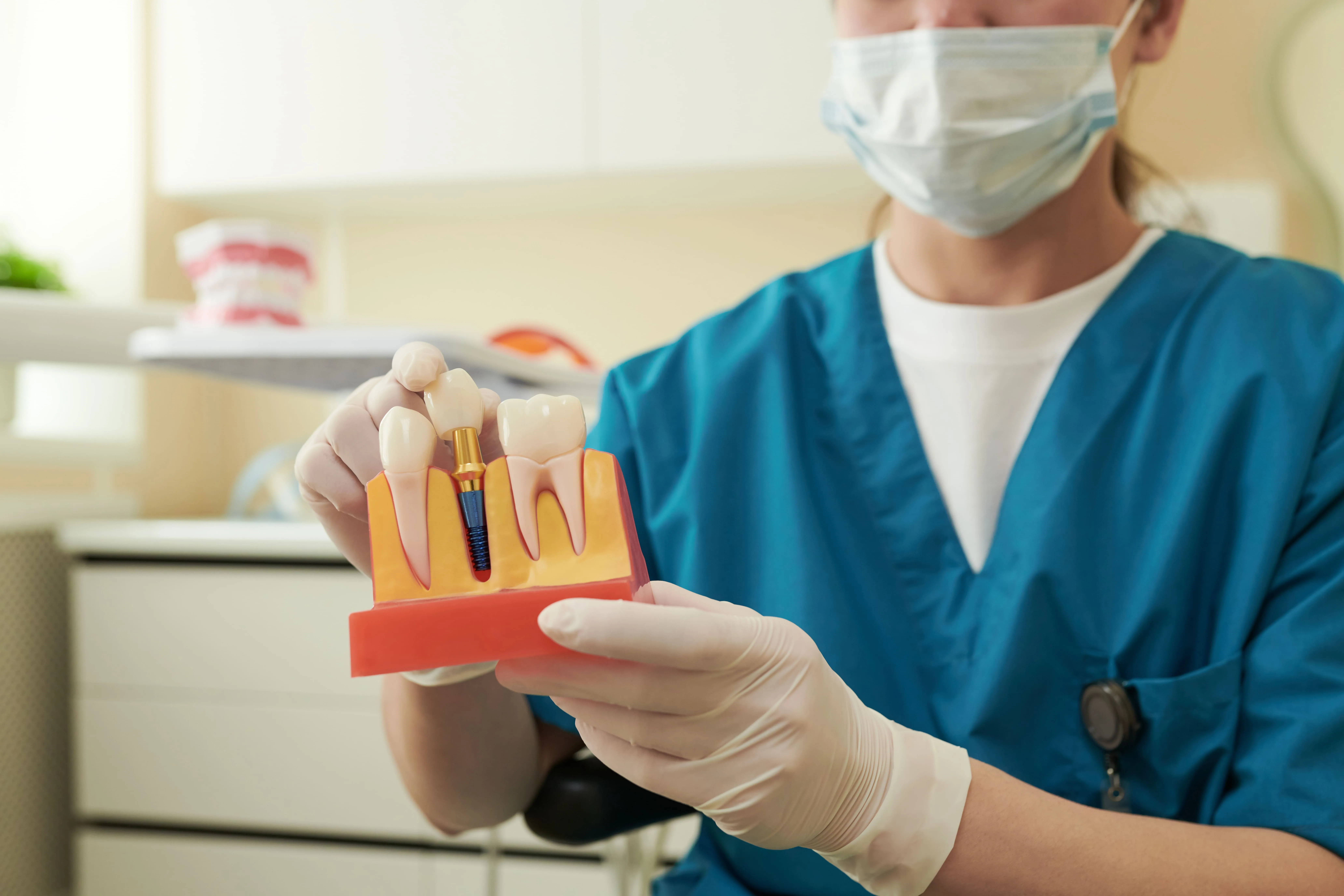
Advanced dental implant solutions to replace missing teeth and restore oral function with permanent, natural-looking results.
Implantology is the study and application of implants across dentistry, orthopedics, and ophthalmology. It involves developing techniques, performing clinical procedures, and compiling knowledge to improve patient outcomes. In dentistry, implantology focuses on the placement of dental implants to replace missing teeth, restore oral function, and improve aesthetics. Our experienced implantologists use advanced techniques and high-quality materials to provide safe, effective, and long-lasting dental implant solutions.
A dental implant acts as an artificial tooth root. It is used to support fixed or removable prostheses such as crowns, bridges, or dentures. Implants provide strong, permanent solutions for replacing missing teeth and restoring oral function. Made from biocompatible titanium, dental implants integrate with the jawbone through a process called osseointegration, creating a stable foundation for replacement teeth that look, feel, and function like natural teeth.
The procedure begins with a comprehensive consultation to determine patient needs and plan treatment. A titanium implant is surgically placed into the jawbone at the site of the missing tooth. As the jawbone heals over 3-6 months, the implant integrates securely with the bone through osseointegration. Once fully integrated, an abutment is attached to the implant, and then a prosthetic tooth (crown), bridge, or denture is attached, restoring natural appearance and function. Advanced imaging and 3D planning ensure precise placement and optimal results.
Implants are not suitable for everyone. Patients with insufficient jawbone density, serious medical conditions, uncontrolled diabetes, or high blood pressure may not be candidates. Proper evaluation by a dental specialist is essential. Our team conducts comprehensive assessments including evaluation of jawbone quality and quantity, review of medical history and medications, assessment of oral health and hygiene, discussion of treatment options and expectations, and development of personalized treatment plans. In some cases, bone grafting may be recommended to provide adequate support for implants.
Dental implants offer numerous advantages:
Replacement of a single missing tooth with a dental implant and custom crown, providing a permanent solution that looks and functions like a natural tooth.
Replacement of multiple missing teeth using several implants to support individual crowns or a fixed bridge for comprehensive tooth replacement.
Full arch tooth replacement using 4 or 6 strategically placed implants to support a complete set of fixed teeth, providing immediate function and aesthetics.
Removable or fixed dentures supported by dental implants, providing superior stability and comfort compared to traditional dentures.
Procedures to augment jawbone density and volume when necessary to provide adequate support for dental implants, ensuring successful osseointegration.
Specialized bone grafting procedure to increase bone height in the upper jaw, creating sufficient space for implant placement in the posterior maxilla.
Placement of dental implants immediately after tooth extraction, reducing treatment time and preserving bone structure when conditions are favorable.
Custom fabrication and placement of crowns, bridges, or dentures on dental implants to restore natural appearance and optimal function.
Restore Function with Implants: Dental implants permanently replace missing teeth, restoring chewing function, aesthetics, and overall oral health. They provide the closest solution to natural teeth.
Assess Jawbone Strength: A strong jawbone is necessary for successful implantation. Bone grafting may be required in some cases to provide adequate support. Your implantologist will evaluate bone quality during consultation.
Avoid Smoking: Smoking can reduce the success rate of dental implants and may impair healing. Quitting before and after the procedure improves outcomes significantly. Smoking increases the risk of implant failure.
Maintain Oral Hygiene: Proper dental care, including brushing, flossing, and regular check-ups, is essential to ensure the longevity of implants. Good oral hygiene prevents complications and ensures long-term success.
Allow Proper Healing Time: Healing typically takes 3–6 months after implant placement, during which the bone integrates with the implant for stable results. Patience during this period ensures optimal outcomes.
Villa 2 Al Athar Street - Jumeirah - Jumeirah 3 - Dubai - United Arab Emirates