This hub under Anti-Aging groups non-surgical paths that lift, tighten, or re-volumise the face: neuromodulators, hyaluronic and biostimulating fillers, thread techniques where available, and RF/energy when suitable. DRFK favours measured, staged change, fewer units or passes per visit when safety and natural motion are the goal, not a one-day “new face” promise.
DRFK Turkish Medical Center is located at Villa 2, Al Athar Street, Jumeirah 3, Dubai. The clinic is easily accessible from Jumeirah, Umm Suqeim, Al Safa, Business Bay, and Downtown Dubai within around 15 minutes via Sheikh Zayed Road, with on-site parking available.
Heavy jowling, very loose neck skin, or significant platysmal banding often need surgical lifting for the degree of change many patients want. We say so in clinic; non-surgical options can still help texture and maintenance around that decision window.
A timeline might pair toxin for dynamic lines, filler or Sculptra for frame support, and an energy course for dermal tightening at different months, your calendar is personal, not a universal bundle.
Strategic filler to cheeks, temples, and jawline re-suspends the face; MD Codes–style 8-point approach for natural lifting.
Stimulates your own collagen for structural tightening; foundational layer lasting up to 2 years.
RF microneedling improves jawline, submental, and cheek skin quality and tension.
Relaxing downward-pull muscles lifts brow and jawline vectors.
Boosts skin glow and healing capacity; accelerates combination outcomes.
Your combination plan is designed by Dr. Sedef Gökce Şenocak and Dr. Seda Erdoğan after layered face analysis (bone–fat–muscle–skin).
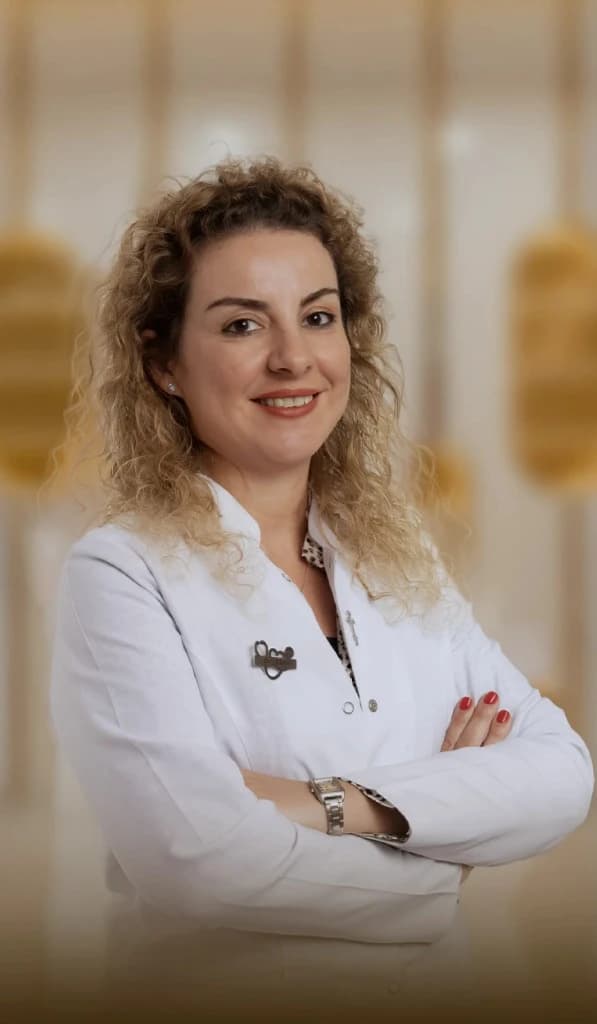
Lead specialist
General Practitioner & Medical Aesthetician
Medical Aesthetics
15+ years experience
DHA License No: 64970314-002
Dr. Sedef Şenocak, Full ProfileNon-surgical facial rejuvenation is a primary clinical specialty. Canadian Board diplomate, DHA-licensed (64970314-002). Maps combination treatment by facial layer.
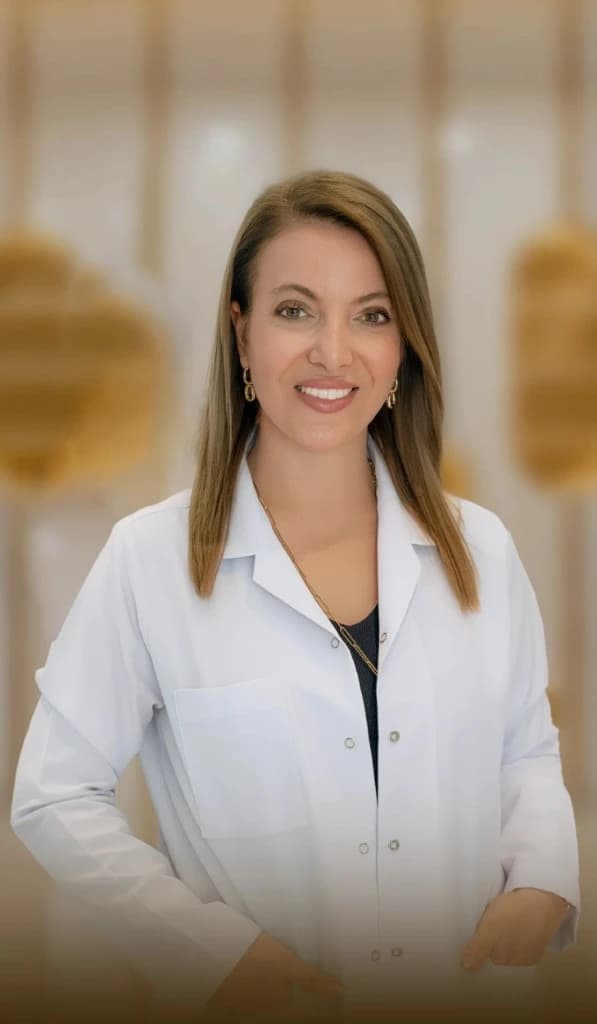
Lead specialist
Dermatology Specialist
Dermatology
15+ years experience
DHA License No: 07420402-001
Dr. Seda Erdoğan, Full Profile15+ years Dermatologist (DHA 07420402-001). Manages the skin-health pillar — elasticity, pigmentation, and safe laser/light integration.
| Step | What Happens |
|---|---|
| 1, 3D face analysis | Photography and vector mapping |
| 2, Sagging source analysis | Volume loss vs skin laxity vs mimic ratios |
| 3, Combination map | Which treatment, which order, which session — written priced plan |
| 4, Staged application | Typically 2–3 sessions without social downtime |
| 5, Month-6 review | Before–after comparison and maintenance programme |
Mild-to-moderate sagging, volume loss, and skin quality decline respond excellently to non-surgical combinations. Advanced skin excess may need surgical facelift — we say so openly; DRFK plastic surgery options are presented in the same centre.
Non-surgical facelift is the strategic combination of non-invasive treatments, lifting, tightening, and volumising, without general anaesthesia, surgical incisions, or recovery period. No single non-surgical treatment achieves what surgical facelift achieves in one session; the non-surgical approach achieves comparable results through a multi-modality protocol.
The honest distinction: Surgical facelift repositions and removes tissue, it is structurally definitive. Non-surgical facelift stimulates tissue contraction, builds collagen, and restores volume, producing meaningful improvement in mild-to-moderate aging for patients in the 35–55 range. The correct combination of treatments is determined by the patient's dominant aging feature.
Mid-face descent: The cheek fat pad descends with age, producing mid-face hollowing and deepened nasolabial folds. Combination of filler volume restoration + HIFU tightening addresses both volume loss and structural laxity.
Jowling (early-to-moderate): Soft tissue descent below the mandibular border. Thread lift provides immediate mechanical lifting; Morpheus8 provides deep SMAS-level tightening, producing a jawline-defining result without facelift surgery.
Skin laxity, neck and lower face: HIFU (targeting SMAS at 4.5mm depth) and Morpheus8 (targeting deep dermis and subdermal SMAS) address neck and lower face skin laxity.
Volume depletion, temples, cheeks, periorbital: Fat pad volume loss correctable with structured dermal fillers and Sculptra biostimulation.
Diffuse skin quality decline: Fine lines, textural roughness, enlarged pores, improved by Morpheus8 and PRP microneedling.
Each treatment targets a different aspect of facial aging, the protocol is built from the combination most appropriate for each patient's dominant concern:
| Treatment | Mechanism | Primary Target | Duration |
|---|---|---|---|
| HIFU | Focused ultrasound at SMAS depth | Deep tissue lifting, brow, mid-face, neck | 12–18 months |
| Morpheus8 | RF microneedling, thermal collagen remodelling | Deep dermis + SMAS, tightening + texture | 12 months |
| Thread Lift | Mechanical lifting with barbed threads | Immediate tissue repositioning, mid-face, jowls | 12–18 months |
| Dermal Fillers | Structural volume restoration | Mid-face, temples, tear trough, jawline | 6–18 months |
| Sculptra (PLLA) | Collagen biostimulation | Global dermal quality + structural support | 18–24 months |
| Botox | Muscle relaxation + brow lift | Dynamic wrinkles + brow elevation | 3–4 months |
Who should choose non-surgical facelift: Patients with mild-to-moderate facial aging who want meaningful improvement without surgical commitment. Patients with contraindications to general anaesthesia. Patients wanting to delay surgical facelift while maintaining facial quality.
Who should consider surgical facelift: Patients with severe skin laxity, significant jowling, or neck skin excess beyond non-surgical capacity, DRFK's plastic surgery team provides this assessment.
| Non-Surgical Facelift | Surgical Facelift | |
|---|---|---|
| Downtime | Minimal, 1–5 days | 2–4 weeks |
| Results | Significant improvement | Maximum structural correction |
| Ideal for | Mild-to-moderate aging (35–55) | Moderate-to-severe aging (50+) |
| Anaesthesia | None required | General or IV sedation |
| Longevity | 12–24 months | 7–10 years |
| Reversibility | Partially reversible | Not reversible |
| Assessment | Purpose |
|---|---|
| Facial Aging Classification | Severity grading, mild / moderate / severe, determines non-surgical vs surgical recommendation |
| Volume Loss Mapping | Fat compartment assessment, cheeks, temples, tear trough, jawline |
| Skin Laxity Grading | Dermis elasticity, HIFU vs Morpheus8 vs thread lift selection |
| SMAS Depth Evaluation | Determines HIFU candidacy, adequate subcutaneous depth required |
| Treatment Sequence Planning | Which modality first, which combination, session spacing |
Focused ultrasound delivered at precise depths: 1.5mm (superficial dermis), 3mm (deep dermis), and 4.5mm (SMAS layer). The 4.5mm depth is the clinical differentiator, it targets the same fascial layer that surgical facelift repositions. Thermal coagulation points stimulate tissue contraction and collagen remodelling, producing a lifting vector that becomes visible over 2–3 months. Best for: Mid-face and brow lifting, neck tightening, early jowl correction.
Barbed PDO or PLLA threads inserted through small entry points, physically lift descended soft tissue in an immediate mechanical repositioning. Results visible immediately; thread degradation over 12–18 months stimulates collagen at the thread track. Most effective for mid-face lift, brow elevation, and early jowl correction.
Thread lift vs HIFU: Thread lift provides immediate visible lift; HIFU produces gradual progressive improvement over months. Both are frequently combined in the DRFK non-surgical facelift protocol.
Deep volumising HA fillers at the mid-face, temples, and jawline, restoring the structural volume that supports the overlying skin and prevents descent. Volume restoration combined with tightening treats both the cause (volume loss) and the effect (descent and laxity) of facial aging.
PLLA injections stimulating global dermal collagen production, improving skin quality, structural support, and the tissue bed that determines how long lifting and volume treatments last.
| Step | What Happens |
|---|---|
| 01, Consultation | Aging assessment, volume mapping, treatment protocol design |
| 02, Session 1 | Primary lifting treatment (HIFU or thread lift) |
| 03, Session 2 (2–4 weeks later) | Volume restoration (fillers + Sculptra) |
| 04, Session 3 (if indicated) | Morpheus8 skin quality improvement |
| 05, Month 2–6 | Progressive improvement as collagen builds |
| 06, Maintenance | Annual reassessment; component-specific top-up |
Combined protocol patients: Schedule downtime for 7–10 days when multiple modalities are delivered in the same session window.
| Treatment | Downtime |
|---|---|
| HIFU | Redness 24 hours; mild swelling 2–3 days |
| Morpheus8 | Redness + swelling 2–5 days; texture improvement begins |
| Thread Lift | Mild swelling + bruising 3–7 days; mild irregularity resolving |
| Fillers | Swelling 24–72 hours; bruising possible |
| Sculptra | Mild swelling + 5×5×5 massage required |
Photographic baseline, skin quality, and discussion of each modality’s limit for your face.
Spaced visits with review between steps; no rush to “finish” the face in a single day.
Avoid sunbeds and harsh peels before laser or device sessions unless cleared.
List all medications and previous fillers/surgery for safety screening.
Plan social downtime: mild swelling is common 24–72h after injectables.
Medically reviewed at DRFK | Dr. Sedef Şenocak & Dr. Seda Erdoğan | Last updated: April 2026
Every day: 9:00 AM – 6:00 PM
Villa 2 Al Athar Street, Jumeirah 3, Dubai, United Arab Emirates